Squaring the circle

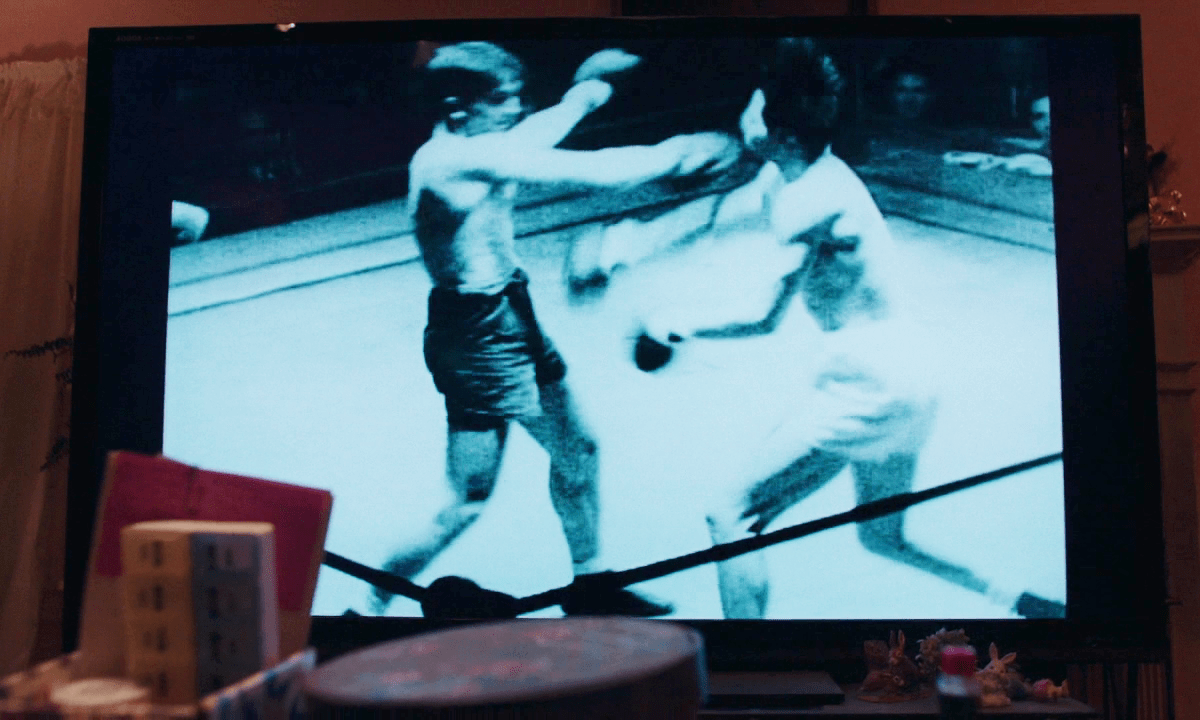
Even though it may not seem so, the links between the third season of Twin Peaks and Alchemy are growing all the time. As we get closer to the end of the series, more and more characters appear to be trapped in time loops or brought back to an earlier version of themselves: James Hurley just performed a song he first played 25 years ago with Maddy and Donna, Sarah Palmer watches over and over again the same sequence from an old boxing match that loops because of a glitch. This “return” feels like a circle back to the very beginning of the show.
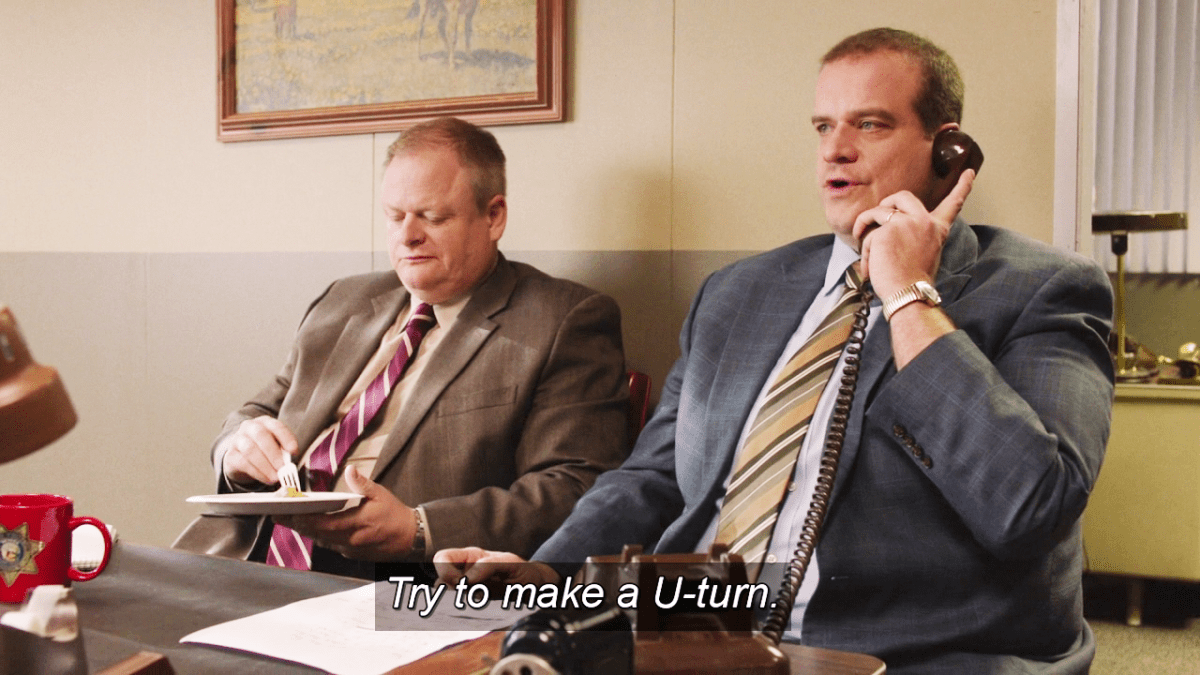
vlcsnap-2017-08-08-11h55m57s197.png

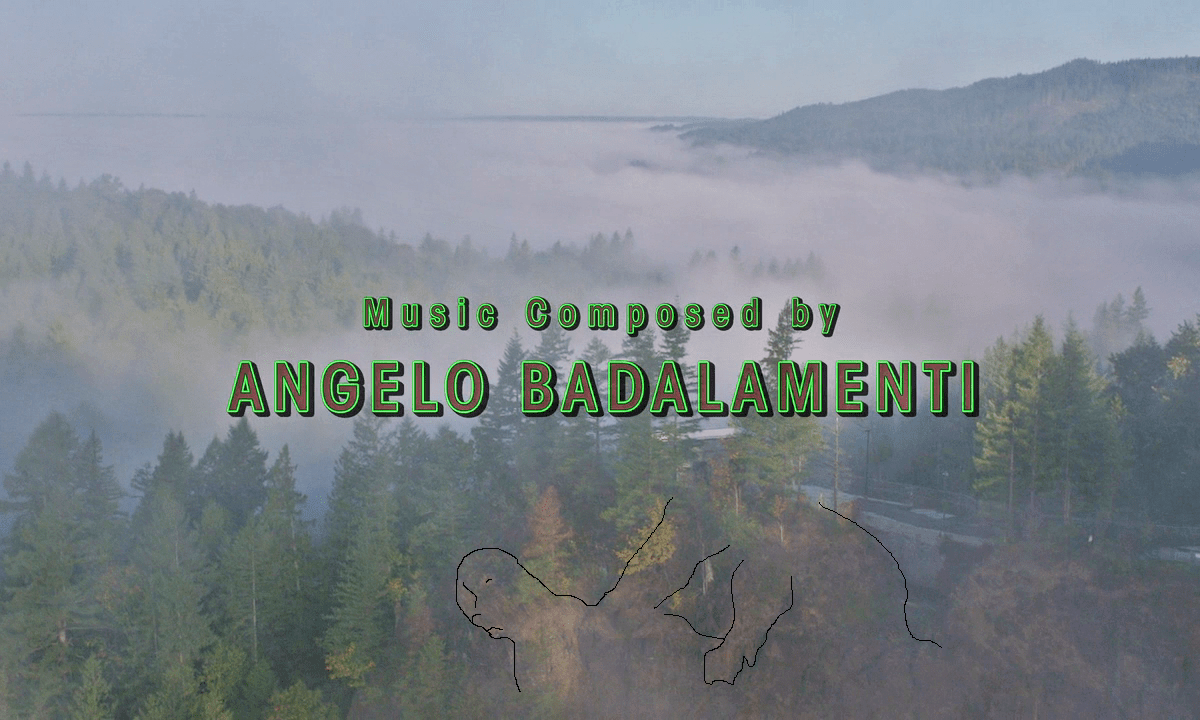
This is why I have argued (link) that season 3 might very well end with a scene reminiscent of Laura Palmer’s body found on the beach in the pilot: Dale Cooper’s body found in a similar fashion, as the superimposed image in the opening credits suggests.

The cyclical nature of time has always been present in Twin Peaks,  and so has Alchemy (as I already argued in my book Twin Peaks: Unwrapping the Plastic). This season nonetheless makes the connection increasingly obvious on a visual level with its many uses of the quadrature of the circle (otherwise known as “squaring the circle”). From episode 1 and its glass box that merges squares, triangles, and circles; to Hawk’s box adorned with an “X”, to the geometric shapes in episode 13 behind Mr C. to Sarah Palmer watching a looped boxing match (that takes place in a ring that is a square).

Meanwhile, Dougie Jones’ own backyard has become a(n) (audio)visual proof of that same cyclicality of time, Ourobouros style. Sonny Jim’s new gym set (courtesy of the Mitchum’s brothers), highly reminiscent of the Emerald City from the Wizard of Oz, is indeed shown to us with the music from Swan’s Lake in the background. Marisa C. Hayes (my wifie ) wrote an excellent analysis of what might have inspired this choice of music and what the implications of this choice are (here). I highly recommend her blog post as it will explain more about the use of doppelgängers and looped time in the ballet, as well as about Tchaikovsky’s music and its relationship to the episode’s soundtrack.

This slideshow requires JavaScript.

Lynch’s choice to use this piece of music certainly brings us back to a former post of mine, the one dedicated to the importance of ducks in Twin Peaks (here). I don’t believe this link to the Anatidae family of birds (ducks, geese and swans) is an accident; it appears in connection with the character of Dougie: everything he touches turns to gold. He is very much the goose who lays the golden egg, wherever he goes.

The fact that the gym set was installed in the back yard is also of importance. One can never insist enough on the central role of gardens (of all types) in the world of Twin Peaks. These (secret) gardens are to be understood as safe places where the Jungian process of individuation can take place and they are modeled on the Garden of Eden (the fountain taking here the place of the rivers that were thought to flow in this mythical place).  Once more this can be read as a return to the beginning of Times, to the place of innocence where mankind is originally supposed to come from according to the Bible.

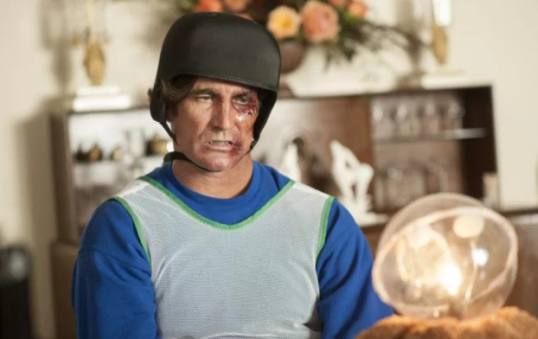
Back in episode 9, one  notices a camera (for the second time in season 3, after the episode in which Sarah Palmer was watching predators on TV – here) in the reflection of the broken frame in which Johnny Horne came running into. Whether this is part of the ongoing theme about surveillance or an accident is yet unclear.

This “encounter” with the image of the waterfall led Johnny to wear an outfit reminiscent of that of a boxer, thus squaring the circle with the beginning of this post.
johnny.jpg

Follow Unwrapping the Plastic: https://www.facebook.com/unwrappingtheplastic/
On the Walls

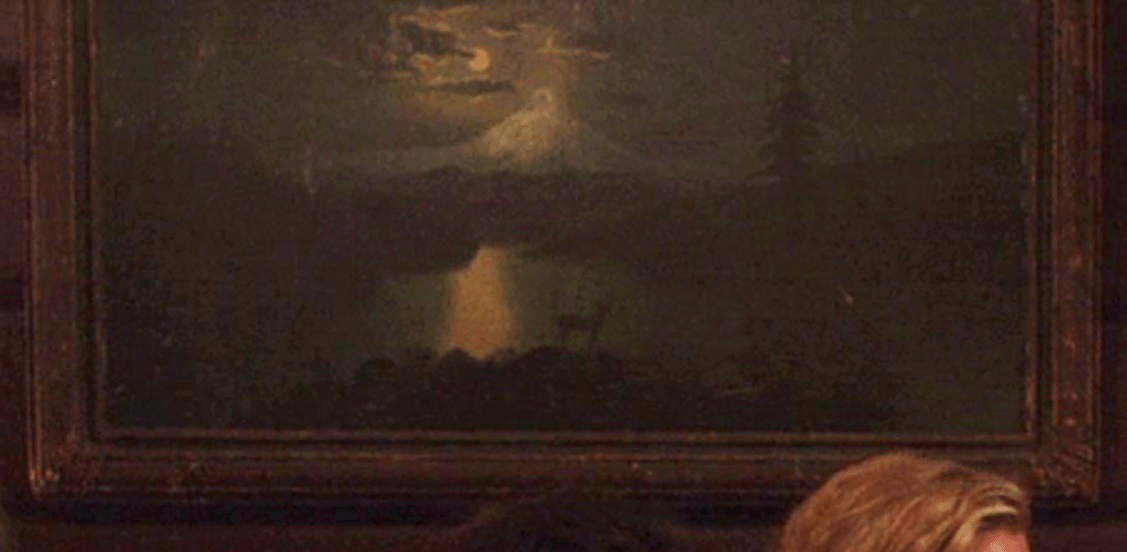
The new season of Twin Peaks has displayed an important number of paintings and pictures on various walls since its first episode – already more than 50 in 12 episodes! Putting them all together in a gallery is interesting because it helps uncover their coherency. The vast majority of them are either composed of flowers or  landscapes (a high contrast with the picture of an atomic explosion behind Gordon Cole’s desk).

Aside from several portraits (Franz Kafka, Bushnell Mullins) and animals (fish), the overall feeling is that of a peaceful Arcadia, a land of plenty which one does not find in the episodes themselves, corrupted by the forces of evil.

Follow Unwrapping the Plastic: https://www.facebook.com/unwrappingtheplastic/

Frozen

Episode 12 proves several times to be very frustrating for the viewer due to the stagnancy and powerlessness faced by some of its characters – notably Albert Rosenfield and Audrey Horne. Their incapacity to make things move faster or to have access to the information communicated to other characters in their scenes, along with the elongated tempo of the sequences in which they are involved, can be nerve-wracking.

Both Albert and Audrey seem to be facing an invisible wall that keeps them at a distance from the “action” taking place, unable to help advance it. They appear rooted in place, standing as trees, without any possibility to act upon what they witness besides using their voices. Interestingly, they are both associated with bucolic paintings, the sort that appear everywhere in season 3. It might be interesting at some point to collect all the frames with such paintings and think about their meaning (an omnipresent Arcadia?).

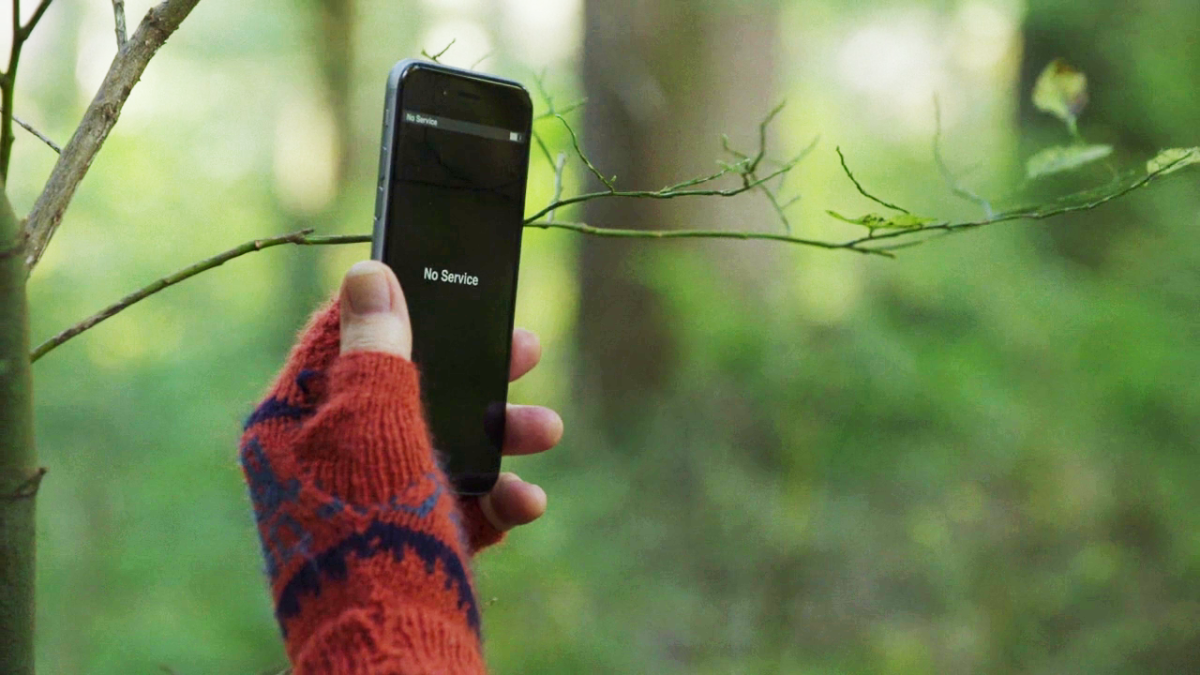
Could the painting under which Audrey stands have something to do with the drone shot over the Twin Peaks forest that follows Diane entering Ruth Davenport’s coordinates in her phone? And could this bird’s eye view of the Twin Peaks forest be related to the opening credits, with the drone shot over what could be Major Briggs’ facility in the mountain?

Also, should we link the end of Doctor Jacoby’s monologue to Audrey Horne’s first screen appearance, when he’s talking about being trapped in Hell? The fact that she does not move from the front of the chimney, inside which a fire burns, might indicate something of this nature.

Another static scene can be found when Dougie and Sonny Jim Jones go outside in their yard for a game of catch. Dougie appears unable to understand that he is supposed to catch the ball and remains standing still, facing his son across the yard. This outdoor garden motif is a recurring one in the works of David Lynch and the scene adds to an already long list of garden sequences in his filmography. In my book Twin Peaks: Unwrapping the Plastic I actually argue that the Red Room is a garden of sorts, a secret garden in which the process of individuation can securely take place.

This slideshow requires JavaScript.

The opening scene of this episode, when Tamara Preston is asked to join the Blue Rose task force, takes place in a room reminiscent of the Lodges’ Red Room (red drapes). But the carpet is different,  much closer to the one found in the Overlook Hotel (in Stanley Kubrick’s The Shining) than to the usual chevron motif from the Lodges. Let’s hope that no big bad wolf haunts the corridors in which Gordon and his team are about to enter. Let’s rock!

Follow Unwrapping the Plastic: https://www.facebook.com/unwrappingtheplastic/

X

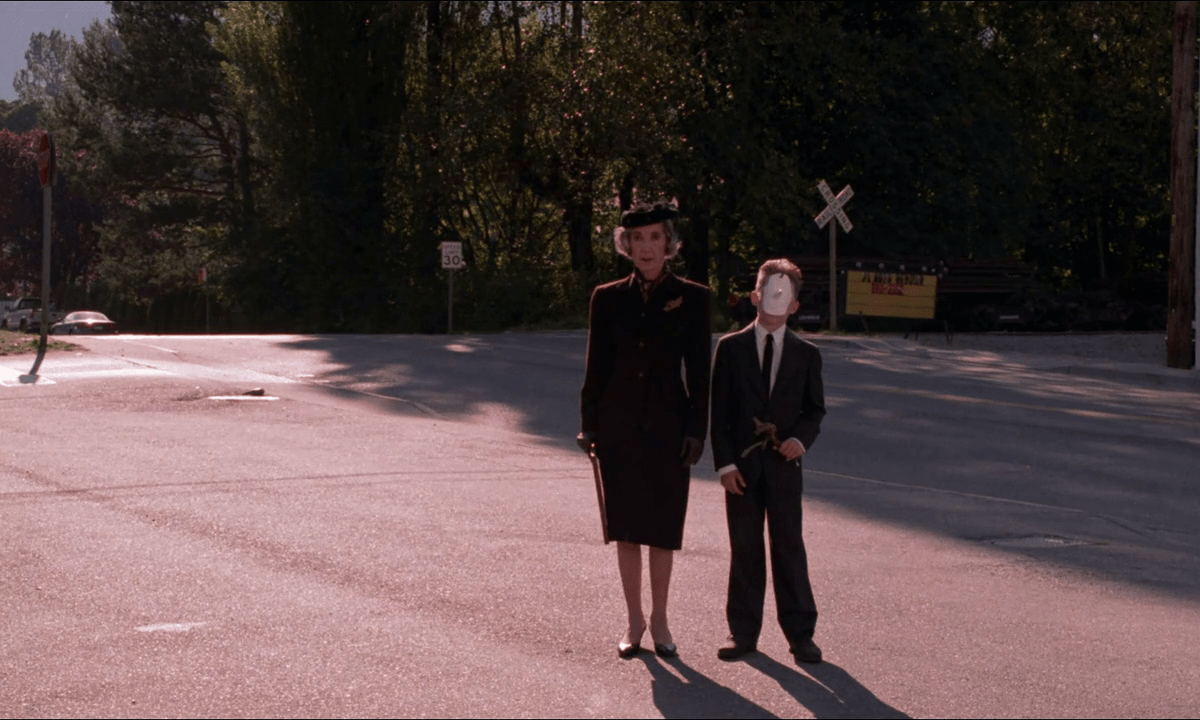
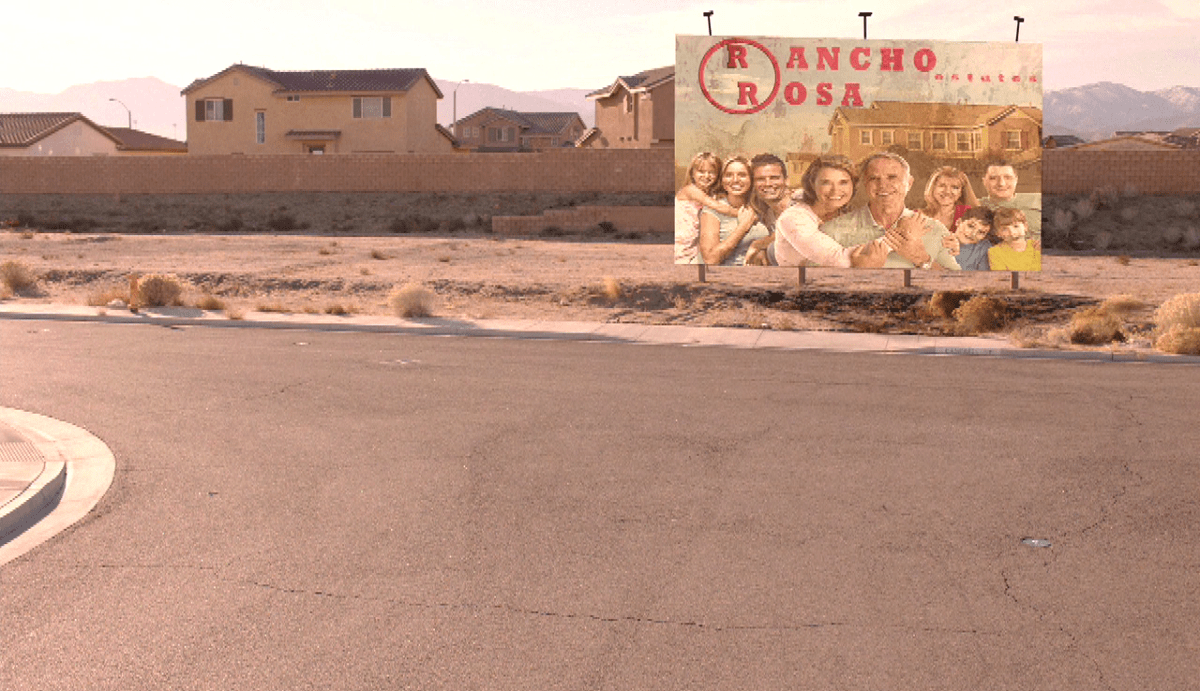
What is it that the R(ail) R(oad) diner in Twin Peaks, the R(ed) R(oom) in the Lodges and R(ancho) R(osa) in Nevada have in common, besides repeating the same opening consonant?

I believe the answer lies in the brief visit Laura receives in Fire Walk With Me from the Tremonds while preparing her meals on wheels: Pierre and his grandmother appear out of nowhere by the rail road sign that warns drivers against possible collisions. The diner was built upon a spot where dimensions meet, where beings from other planes of existence (which I name the Fourth Dimension in my book Twin Peaks: Unwrapping the Plastic and which Bill Hastings calls The Zone in season 3) are able to visit the inhabitants of Twin Peaks in their three dimensional reality, just as trains (associated with the past and otherness – recall that Laura is killed in a train car) are able to cross the path of today’s cars.

This slideshow requires JavaScript.

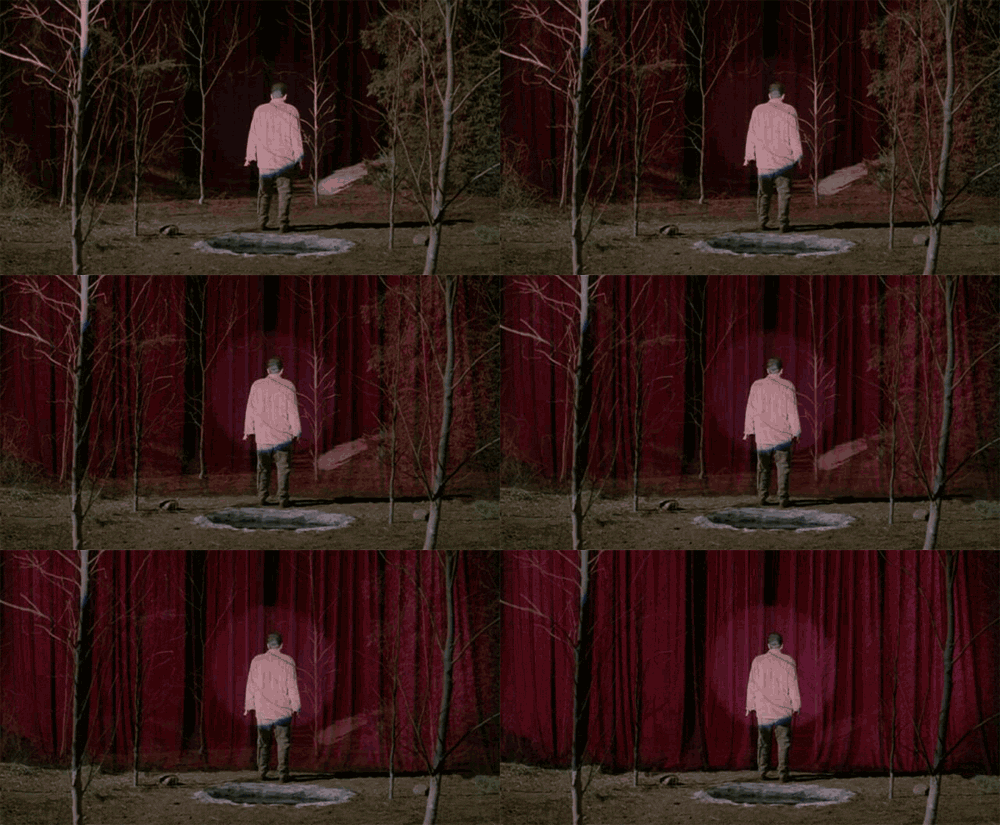
The Red Room has a similar role, though instead of trains meeting cars, it’s people and Lodge entities who connect at a right angle (see Dale’s position below, in relationship to the Lodge entities). Dale and Laura’s visits to the Red Room enable them to discuss with The Man From Another Place, with the Giant, etc. It is a space between dimensions, between realities, that enables these prolonged encounters.

Figure 4

Rancho Rosa’s role, is not so different from the one of the RR diner or the Red Room. There too, a being from out of time and space (the good Dale, trapped in the Lodges) is reincarnated in a spot mixing past and present, the Wild West and contemporary America, the desert and the city. Rancho Rosa is just another version of the RR and the Red Room, set in a different spacetime.

Rancho Rosa
“Something’s missing”, says Hawk: in Rancho Rosa, it’s the inhabitants seen on that poster who seem to have disappeared.

Follow Unwrapping the Plastic: https://www.facebook.com/unwrappingtheplastic/

Faces of trees

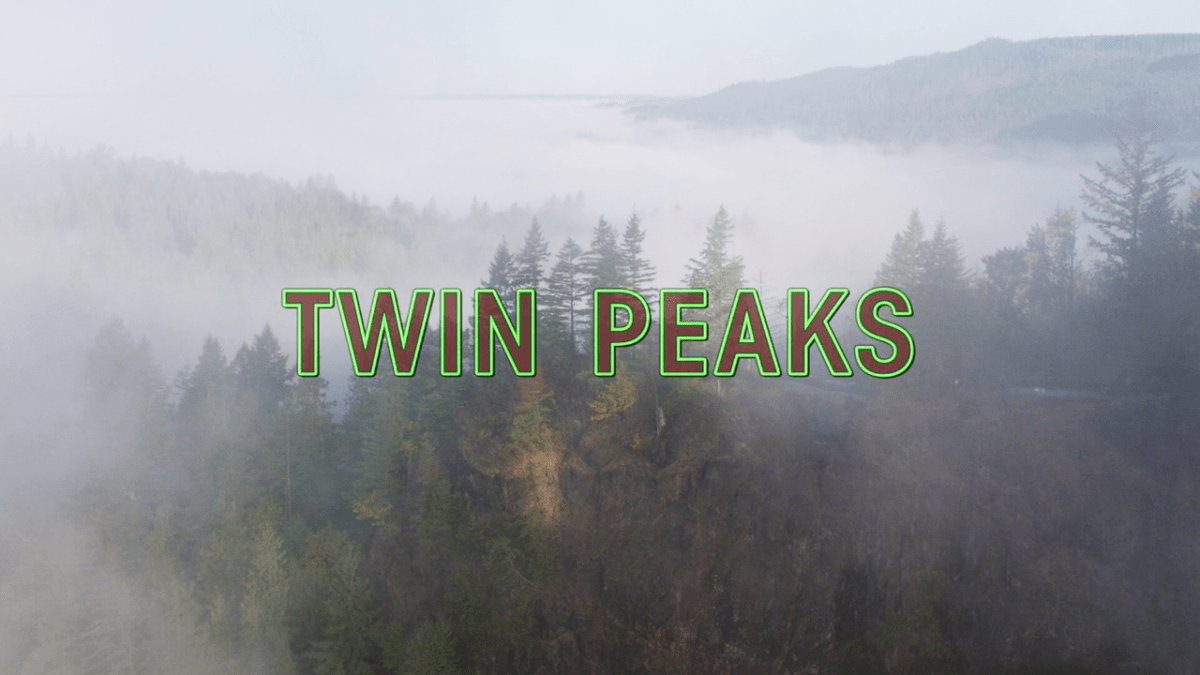
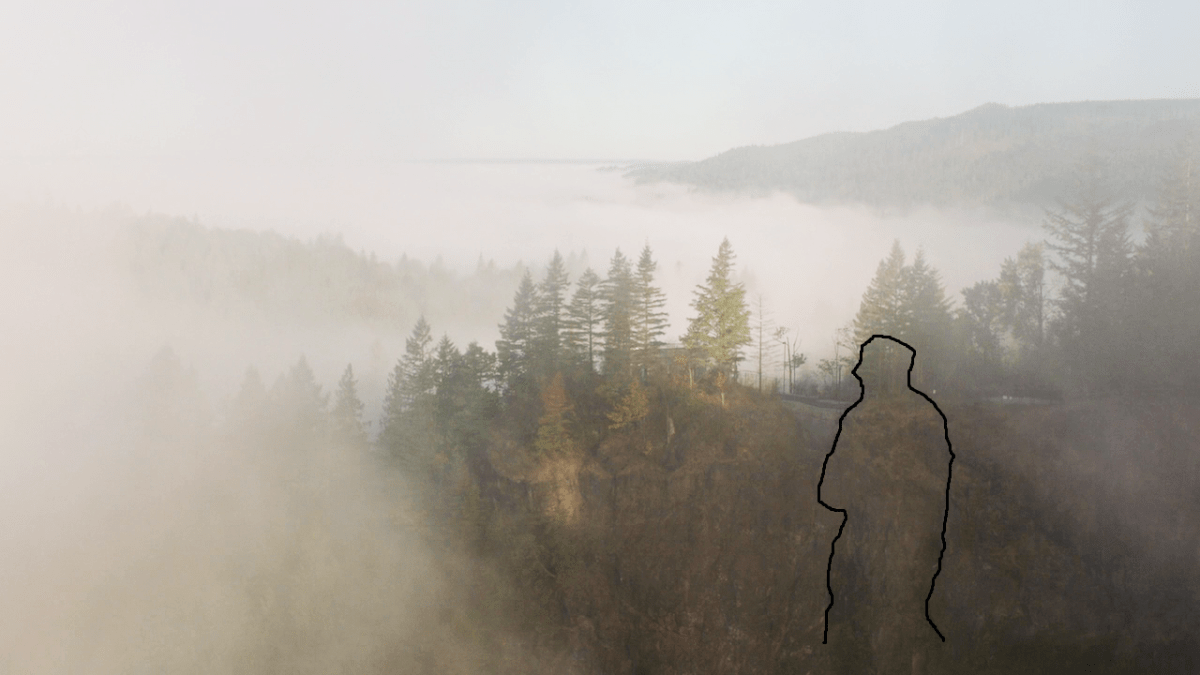
Ever since I viewed the first episode of the new season of Twin Peaks, there has been something about the opening credits that struck me as strange. Something felt off when the camera was flying above the forest, right after Laura’s ghostly image had disappeared from the frame. It felt as if something was superimposed on the fly-off.

Twin Peaks Opening Credits.png

——> Season 3 Opening Credits

I now believe that I have “seen” what was masked there, within the trees.

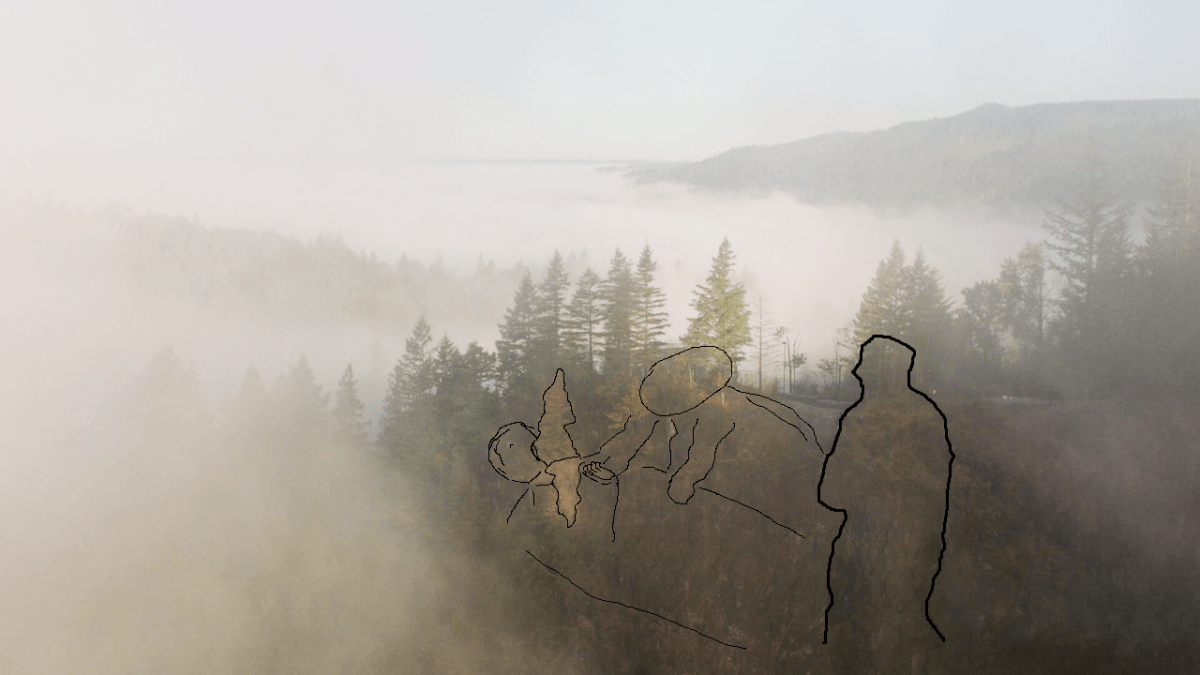
The first things that I saw were portions of a head and a hand. And then I saw a body lying amid the trees. And then another body on top of it, with its hand on the first body.

This slideshow requires JavaScript.

Here is what I see in this image:

cooper palmer.png

Which of course reminded me of the following image:

Wrapped in Plastic.png

So what is this all about?

I believe that the body hidden in the forest/rocks (“faces of stone”) is Cooper’s. And I think that season 3 will end with his return to Twin Peaks in a similar manner to Laura’s first appearance on the show: on the beach (the sea of clouds), with someone looking over the body (sheriff Truman, judging by the shape of the hat).

This would close the circle perfectly and bring us back to the very beginning of the series, linking both its main characters, Dale and Laura. It would be their alchemical wedding of sorts.

Am I seeing too much in this image? I think not.


July 28th

I now believe there might be a third person in this image:

Third shape.png

Third shape & Coop

Vomiting Garmonbozia…?:

Garmonbozia

Clear.png

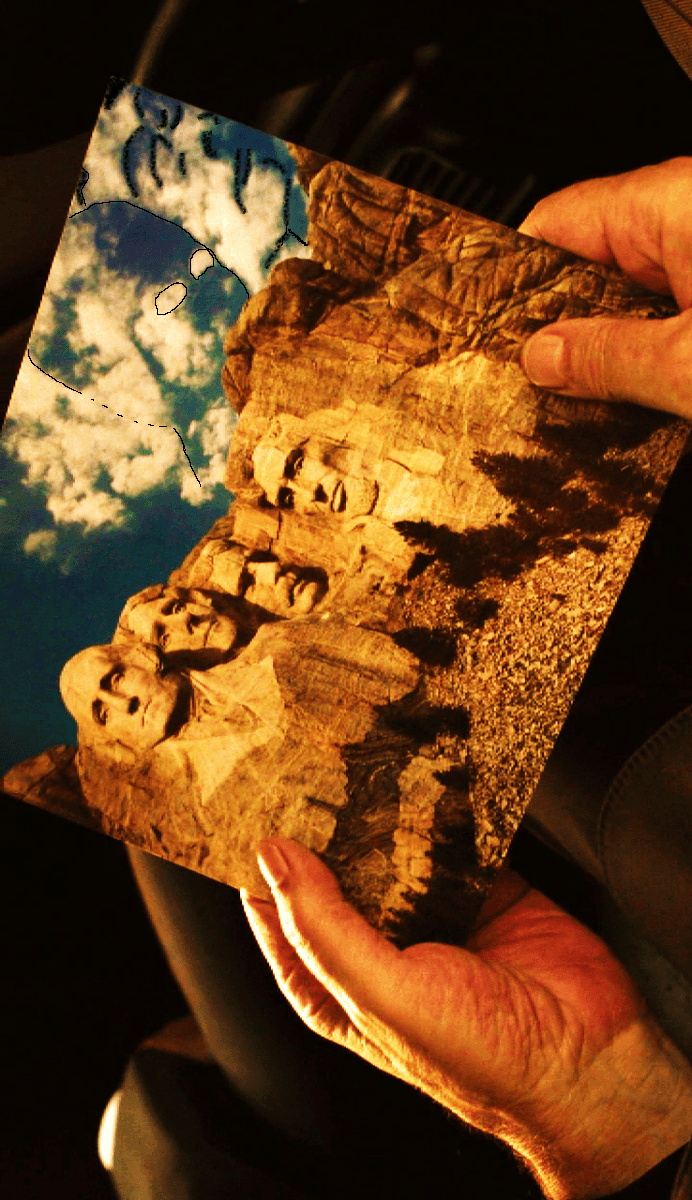
All of this probably should probably be contextualized within the framework of this image (“faces of stone”):

Rushmore

Faces of clouds…?

rushmore (2).png

rushmore drawing.png

Also, in Mark Frost’s The Secret History of Twin Peaks: “Under confidential orders from the president, Lewis traversed an untamed wilderness and returned triumphant. Based on my recent findings it is reasonable that Jefferson sent Lewis not only to find a “Northern Passage” to the Pacific — history’s standard narrative — but to investigate many strange rumors and claims stemming from this region: an unknown tribe of “white Indians“, the existence of fabulous gold and silver mines, the possible existence of mastodons, sea monsters and other quasi-mythical beasts, as well as traced of ancient, vanished civilizations, including a mysterious race of giants“. Tamara Preston adds a note: “I can verify that there are dozens on 19th- and early-20th-century newspaper stories from across the country detailing the recovery of various “giant skeletons” — usually seven to nine feet tall — most often from ancient burial mounds. These are believed to pre-date any previously known North American civilization“. (p.33)

Follow Unwrapping the Plastic: https://www.facebook.com/unwrappingtheplastic/

Abercrombie, Colville and Chief Joseph

This blog post was “liked” on Twitter by Mark Frost

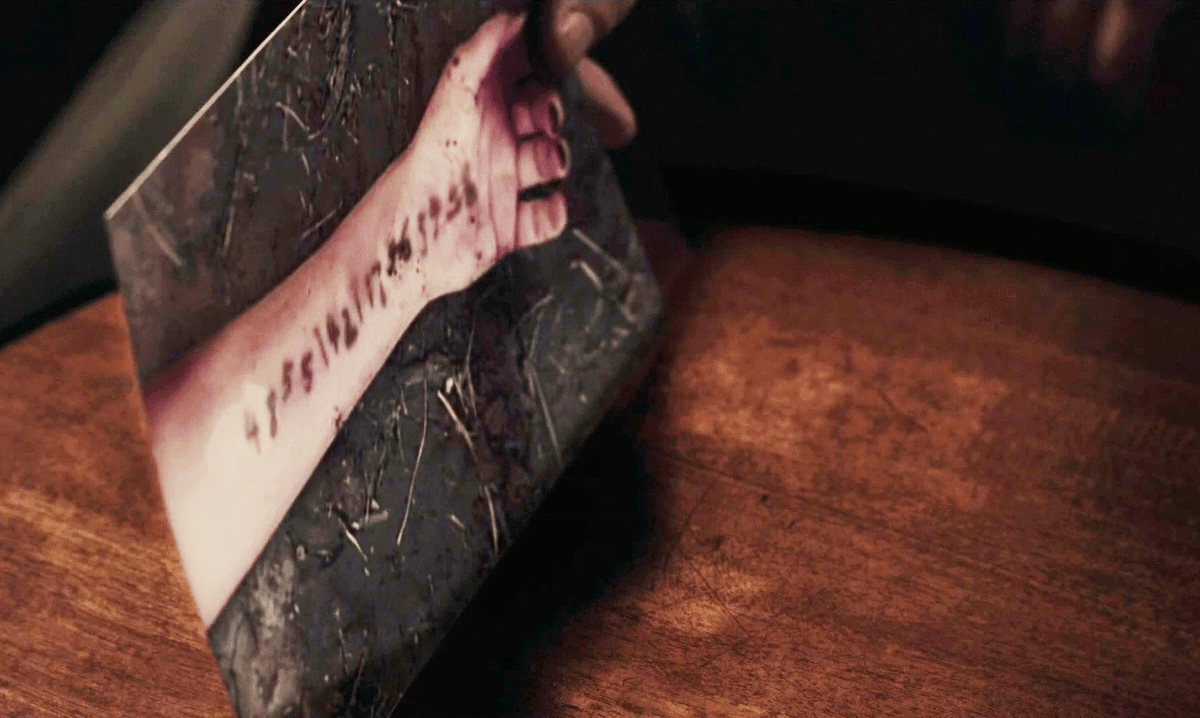
It appears that the coordinates on Ruth Davenport’s arm lead to a place in the northeast of Washington State, close to the fictional location of Twin Peaks. They point to the Abercrombie Mountain, near the city of Colville.

This slideshow requires JavaScript.

These coordinates are extremely significant for two reasons. First, due to the etymology of Abercrombie: ‘confluence of rivers at a bend’ or ‘mouth of the bendy river’. This should not come as a surprise, knowing the importance of rivers and streams of water in Twin Peaks. This location is either where rivers meet or where they originate. In both cases, it is a spot of the utmost strategic importance, both in the physical world and in the spiritual one.

But even more crucial than this is the proximity of the small city of Colville (from the French: col = a neck, strait, or defile; a pass between hills; and ville = a town, the place in the gorge or pass of the dell). Following the 1877 war between the United States Army and the Nez Perce tribe (from the French: pierced nose), which brought their leader Chief Joseph to surrender, Joseph and 268 surviving Nez Perce were finally allowed to return to the Pacific Northwest in 1885. The former settled at the Colville Reservation in Washington. His real name was In-mut-too-yah-lat-lat, “Thunder Traveling over the Mountains”. In other words, electric fire.

Chief_Joseph-3_weeks_after_surrender-Oct.1877
Chief Joseph

The various events surrounding the fate of the Nez Perce are prominent in Mark Frost’s The Secret History of Twin Peaks. Chief Joseph is actually described in the book as having had a close relationship with the Lodge entities (the “Sky people”). Prior to his retreat, he made a mysterious “pilgrimage” to “the place of smoke by the great falls and twin mountains, to seek the aid of the Great Spirit Chief“. This gave him the power to travel through mountains and create traveling clouds of smoke to misdirect his enemies.

Follow Unwrapping the Plastic: https://www.facebook.com/unwrappingtheplastic/

Etant donnés

Following yesterday’s episode, I believe that some of you might like to read the articles I wrote a few weeks ago concerning the importance of spirals in Twin Peaks (link)…

… as well as about electrical fire (link).

Episode 11 further develops these themes, and introduces new ones that should prove important in the coming weeks. The episode also makes some of the artistic connections I had discussed earlier, in my book Twin Peaks: Unwrapping the Plastic or on this blog, more apparent. Several of these links occur during the scene when Gordon, Diane, Albert and Tamara go to the place where Bill Hastings saw Major Briggs.

In my last post, I discussed the influence of Dutch painter Hieronymus Bosch on David Lynch’s work. When Gordon Cole sees the whirlpool in the sky above Buckhorn, the visual similarity to Bosch’s Ascent of the Blessed (1505-1515) is striking. The fact that this whirlpool leads to a room where the homeless bearded men are standing is also reminiscent of what I wrote concerning the angelic nature of the coal lumberjack at the end of episode 8.

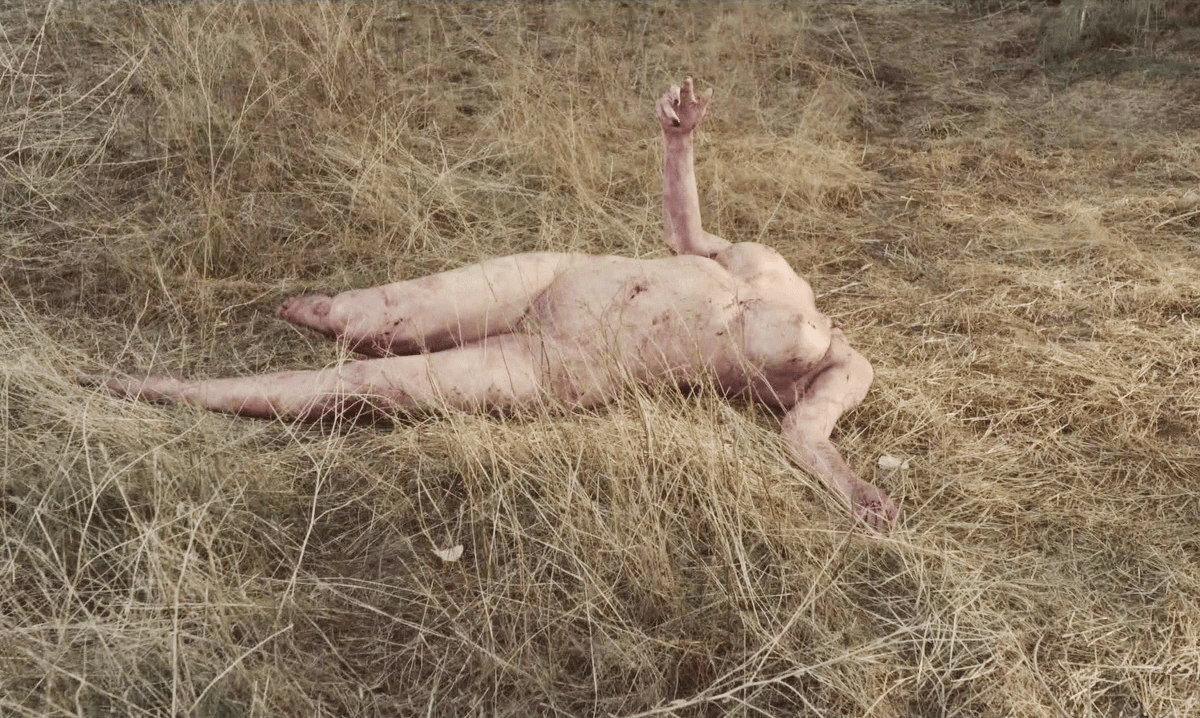
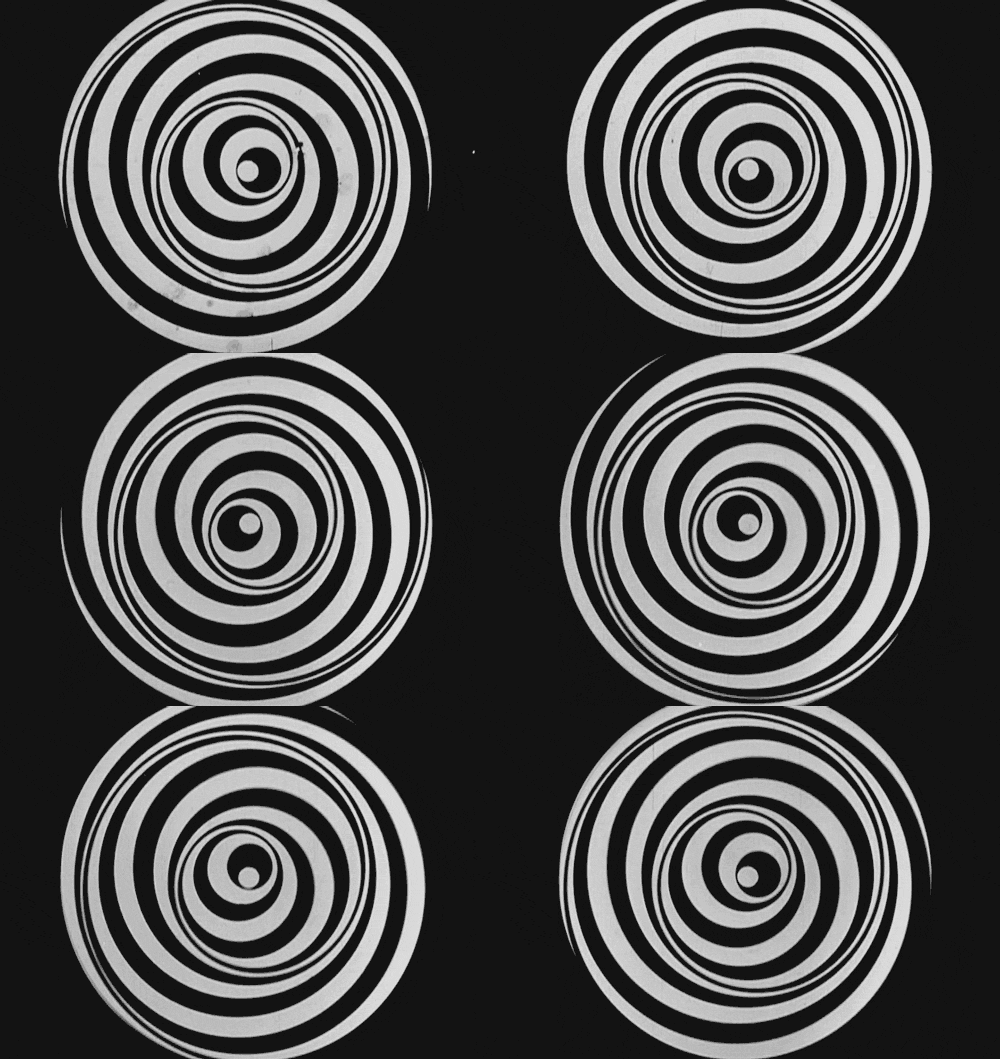
But the most important artistic reference in this episode might very well be that of Marcel Duchamp, which I discuss at length in my book. Let me just note here the importance of two works by the Franco-American artist: his Rotoreliefs, reminds us of the spiral tunnel in the sky; and his last work, Etant donnés (1946-1966) with its obvious links to the body of Ruth Davenport.

Rotorelief
Rotorelief

Marcel Duchamp – Etant donnés (1946-1966)

In a former post about ducks, I mentioned the importance of the golden egg on top of Big Ed’s Gas Farm. When Dougie is called by MIKE towards the place where he buys a cherry pie in Episode 11 (Szymons), the same visual logo appears on the shop’s front, making it clear that what he will buy there will be golden for his personal future, continuing the link with alchemy and quintessence (the fifth classical element, probably the one that makes those pies so damn good!). This link appears in another form shortly after when Dougie carries the box (square) in which one finds the pie (circle) – this is another squaring of the circle moment, omnipresent since the glass cube scenes in Episode 1.

Follow Unwrapping the Plastic: https://www.facebook.com/unwrappingtheplastic/

Rudolph

Episode 10 in the 3rd season of Twin Peaks is a good reminder of David Lynch’s many talents and especially the fact that, despite his many interests (cinema, music, etc.), he is first and foremost a painter, as the documentary The Art Life recently reminded viewers. This is why it is so fascinating to see him caught in the act of drawing in his hotel room, as Gordon Cole, just prior to being interrupted by a series of visitors – Laura, Albert and Tamara.

vlcsnap-2017-07-20-15h07m20s574.png

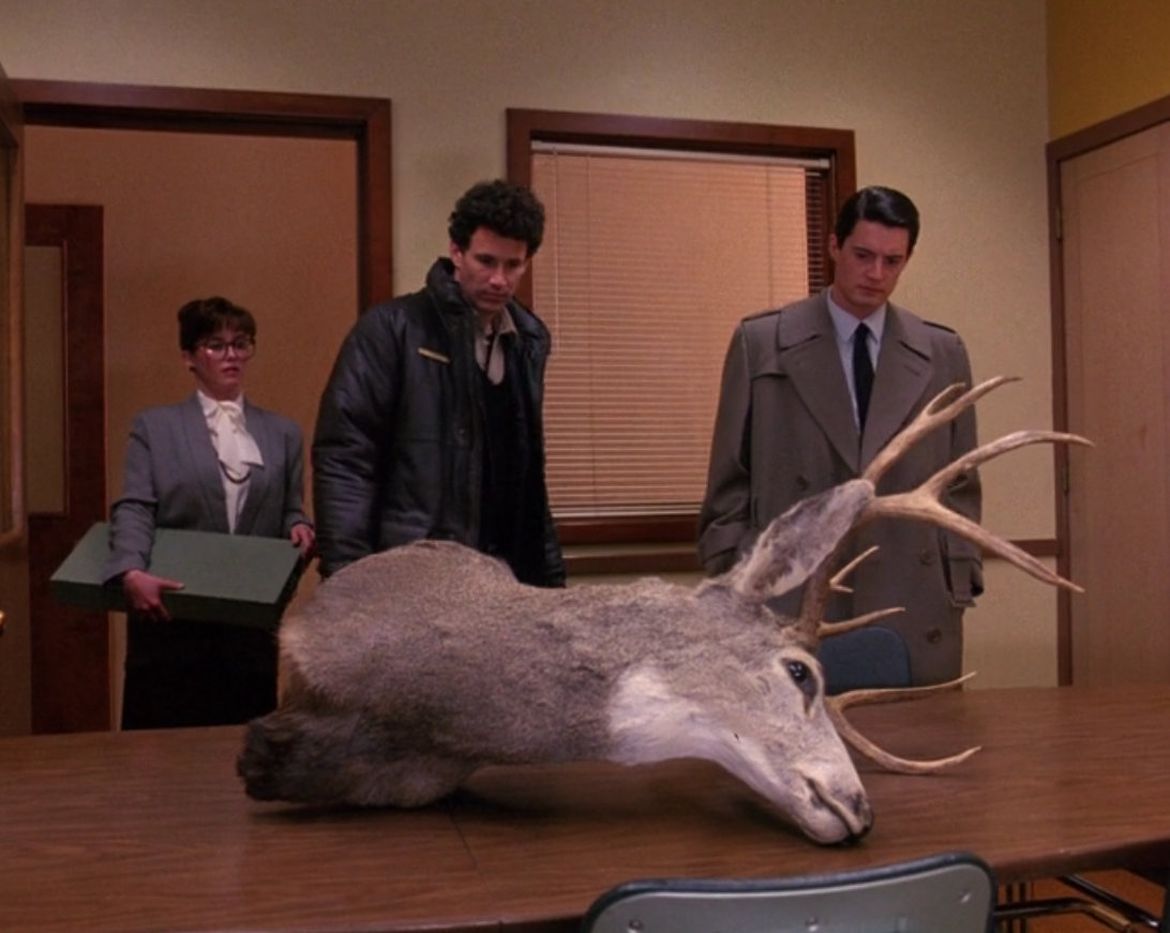
What does Gordon draw? An arm reaching towards a reindeer. It’s difficult to know for the time being if this is supposed to represent the Lodge’s arm (i.e. The Man From Another Place). What is certain is the fact that deer have long played a central role in Twin Peaks, ever since the series’ pilot in 1990.

twinpeakstaxidermy.jpg

Interestingly, Gordon’s drawing is not the only appearance of a deer motif in the latest episode. In fact, the episode opens with a sequence set in front of Miriam’s trailer, where one can see a collection of Christmas-themed decorations, including several reindeer. Santa Claus’ reindeer are famous for their ability to fly through the night sky. Here, we are supposed to think of  reindeer as mythological beings, outside the earthly realm.

This slideshow requires JavaScript.

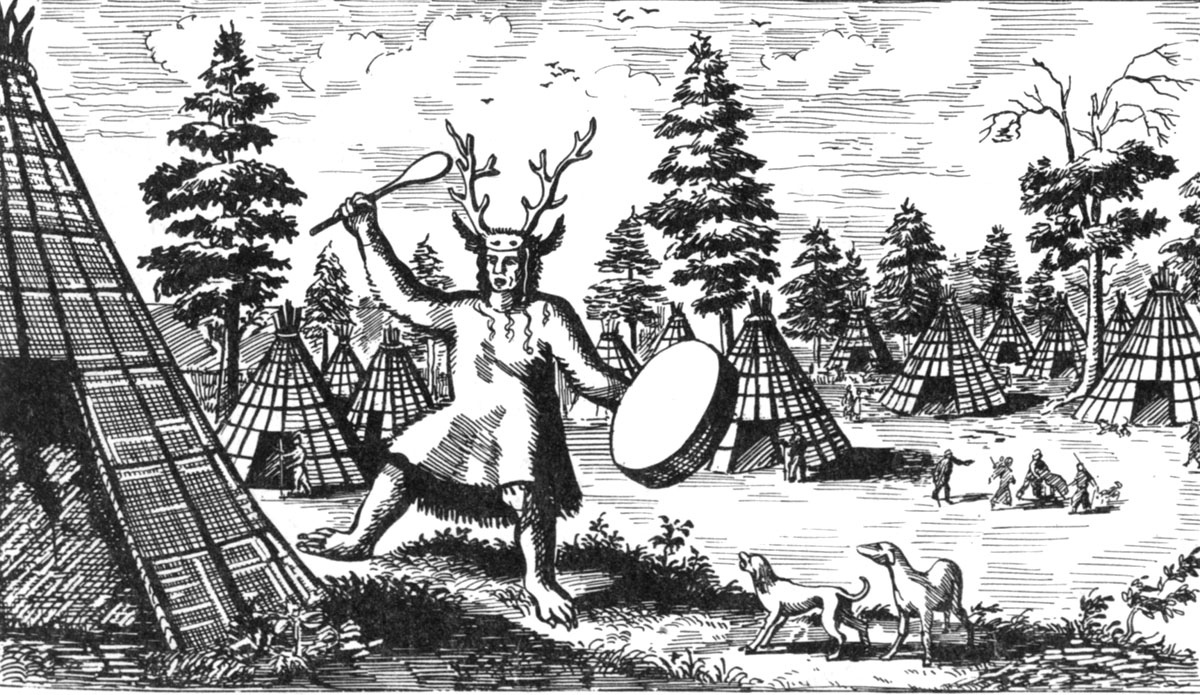
This is connected with shamanistic ideas about reindeer in general and their antlers in particular. If one looks closely at Gordon’s drawing, it appears that the hand is less reaching towards the body of the deer than towards its antlers (which look like trees). This is because they serve simultaneously as weapons and representations of power – the person who controls the antlers is going to become very powerful.

One can read the following statement on Wikipedia: “Although different Siberian peoples follow different traditions, many ceremonial practices involving reindeer possess similar underlying features. These often relate to the well-being of the herd and the monetary benefits gained as a result, reflect the people’s nomadic heritage, and express humanity’s relationship to the cyclic progression of the seasons. In general, sacrifices take place in ‘sacred places’, which are usually sanctified thickets in the woods that are home to gods or spirits and where hallowed trees stand“. One such sacred place, home to gods or spirits, can be found in Twin Peaks: Glastsonbury Grove. This is something I discuss at length in my book Twin Peaks: Unwrapping the Plastic.

giphy2

Шаман_17_в
Tungus shaman wearing antlers, 17th century drawing.

Meanwhile, the surveillance theme found throughout the third season continues with the log book belonging to the casino bosses (the brothers Mitchum), watching the multiple monitors of the control room, bestowing upon them a feeling of omnipotence.

This slideshow requires JavaScript.

Waves of all sorts appear to play a central role in Twin Peaks and it is interesting to follow Jerry Horne’s descent into a realm where he does not have access anymore to the usual network of electromagnetic airwaves necessary for modern communication. He appears to be increasingly lost from the world: a few episodes ago he was still able to call his brother on the phone, now he does not  have this option anymore. Where this “trip” is going to lead him is as yet unclear.

vlcsnap-2017-07-20-14h33m53s428.png

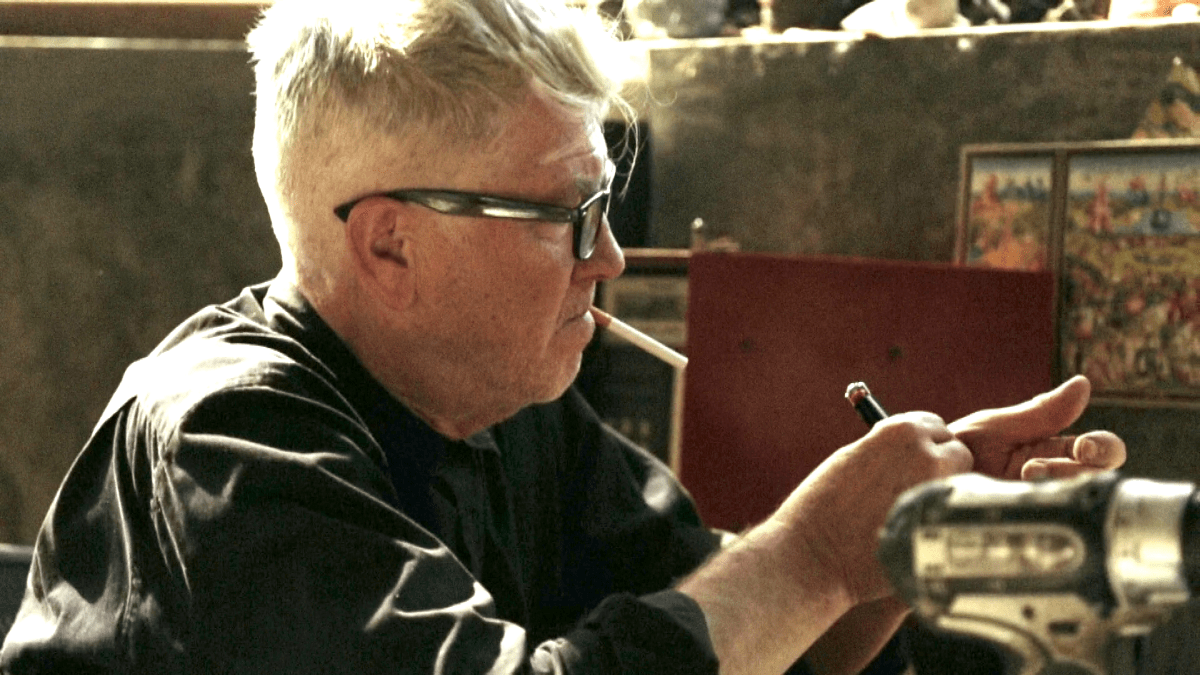
Finally, backtracking to episode 8 and its hybrid creature in New Mexico, a strange mix of toad and insect: a possible path to follow in order to understand where it comes from can be found in the above mentioned documentary, The Art Life. Several times during the course of the documentary, David Lynch is filmed at his desk and on the wall next to the desk one can see a reproduction of a famous triptych by Dutch artist Hieronymus Bosch entitled The Garden of Earthly Delights (1490-1510).

vlcsnap-2017-07-20-19h55m17s594.png

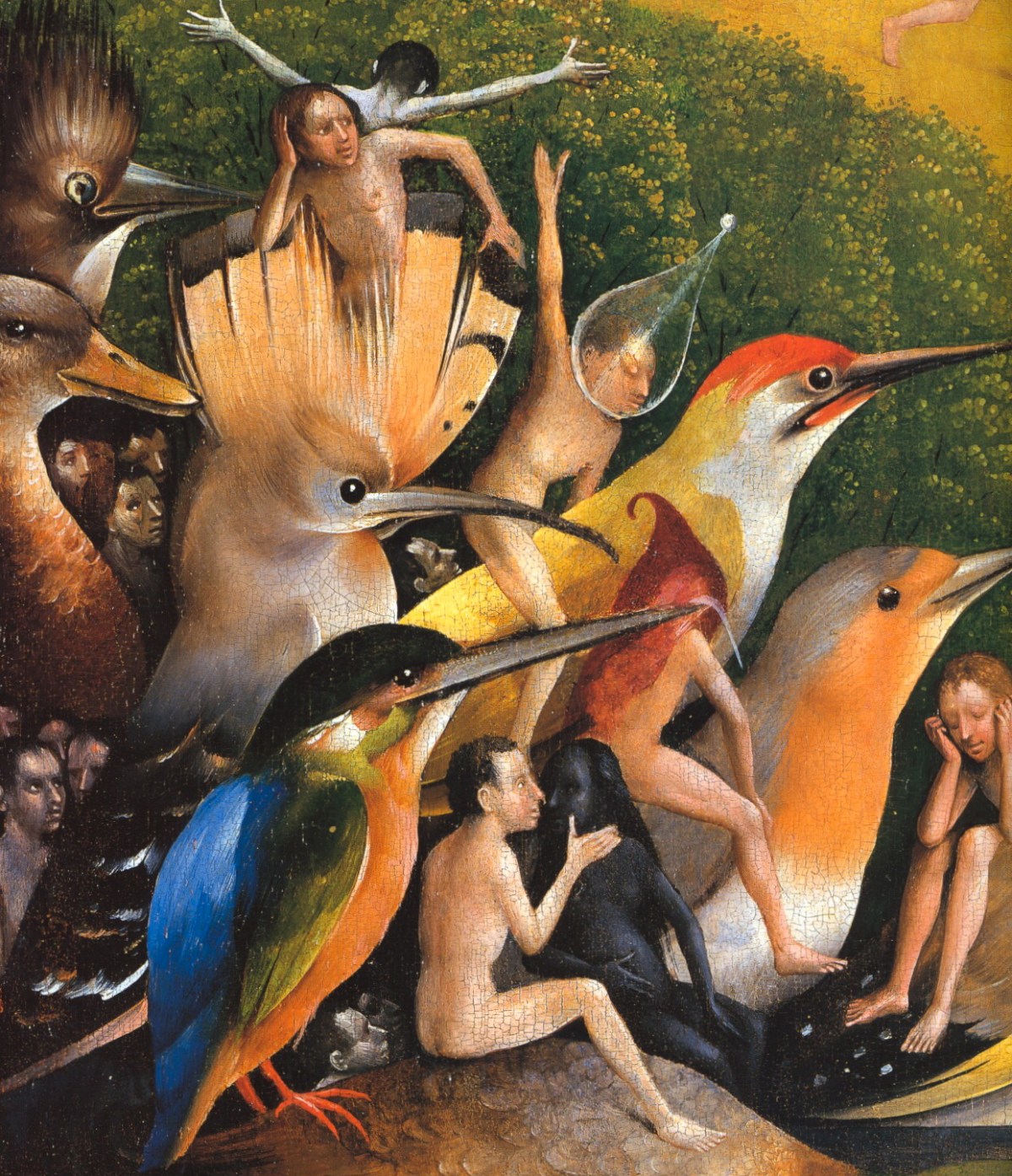
It would be interesting to analyze this painting in depth so as to explore the possible links with the works of David Lynch (grotesque creatures, owls, gardens, etc.). In the reproduction below, a close-up of the central panel of the triptych, for instance, next to the many gigantic birds of all sorts (birds are of course of the utmost importance in Twin Peaks) sits a charcoal human figure not unlike those found in the new season of the series.

garden del black.jpg

vlcsnap-2017-07-20-19h52m20s754.png

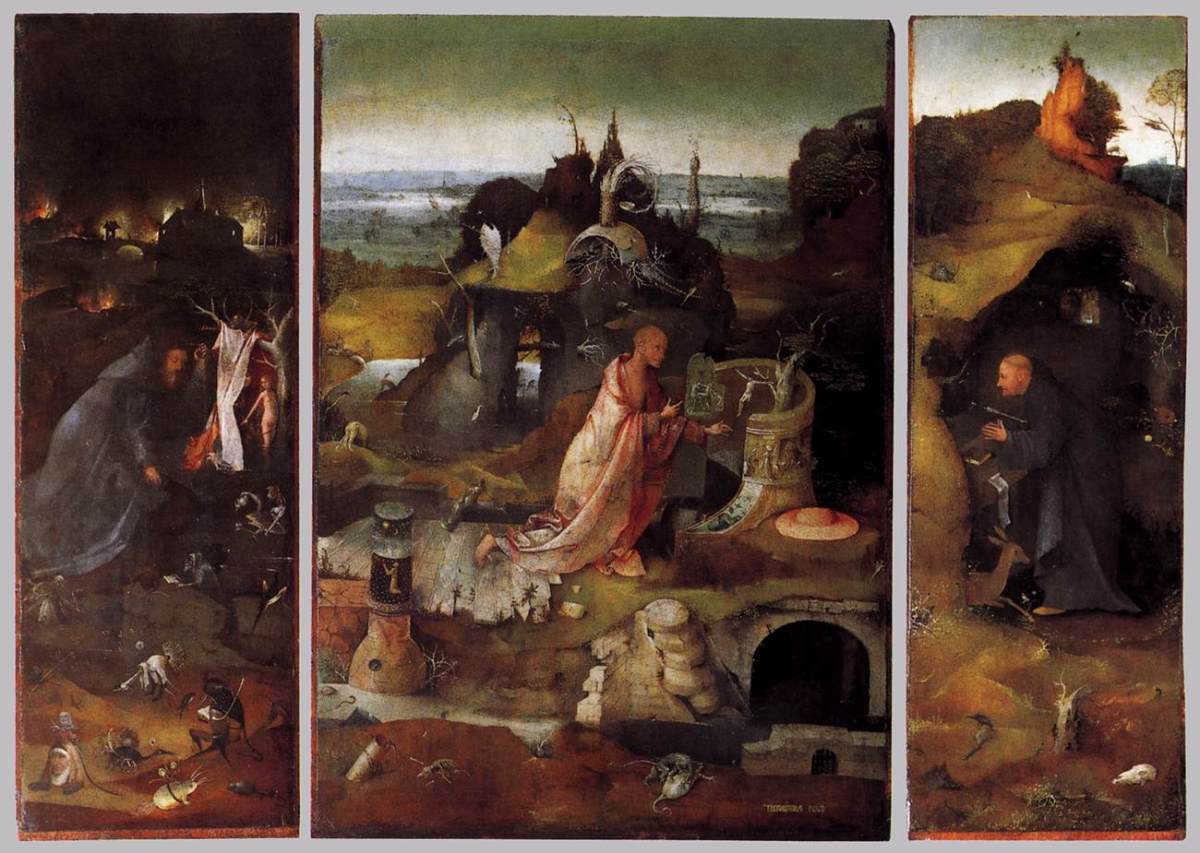
Beyond that, it’s worthwhile to study the Bosch’s other works,  appreciated by Lynch, in order to unearth visual and thematic connections. Below is a close up of a portion of another Bosch triptych, The Hermit Saints (1493). Among a series of weird looking creatures (including an owl on top of a walking head), one can see a winged toad reminiscent of the one seen in episode 8.

hermit-saints-triptych.jpg

This slideshow requires JavaScript.

While we can’t be sure yet of any certain links between these paintings and Twin Peaks, the fact that David Lynch works in his studio close to a reproduction of Bosch’s painting certainly gives some validity at least to an unconscious influence  on his work.

Follow Unwrapping the Plastic: https://www.facebook.com/unwrappingtheplastic/

Getting to Jack Rabbit’s Palace – drink full and descend

Concerning the mysterious Jack Rabbit’s Palace mentioned in Major Briggs’ note, I’d like to copy a quote here by David Lynch, which I included in my post about episode 8. I believe it might be helpful to understand more about what this place is:

What is kind of incredible is that there are, like quantum physics now says, ten dimensions of space and one dimension of time – that’s what they’ve come up with. Ten dimensions of space – what does that mean? There’s a field of relativity, it has a surface, and it has depths. There are, like they say, worlds within worlds within worlds, just unbelievable stuff going on in the field of relativity. And that’s all real interesting, but as Maharishi says, that’s only the ‘market-place’. You go through the market-place, and it’s real interesting, but there are lots and lots of chances to get waylaid and even go backwards and get lost, get in trouble. Maharishi always says, capture the fort, and then all the territories are yours – so get to the palace, get to the palace – and then you own all that you survey. ‘Get to the palace’ means transcend, get to the deepest level“. (in David Lynch: Interviews).

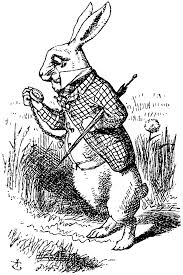
rabbit.jpeg

Follow Unwrapping the Plastic: https://www.facebook.com/unwrappingtheplastic/