Four Birds With One Stone

This time we are not dreaming anymore, the 25 year night has finally come to an end and “the sleeper has awakened”: Twin Peaks is really back on our screens and we have already been treated to four new episodes.

The first two, although interesting for widening the scope of the original series to include new places and characters, remain pretty much in tune with what we already knew about Twin Peaks (actually, the Red Room sequences are not as surprising as they used to be a quarter of a century ago). This likely served to bring us back into the narrative while introducing new threads, and the excellent third episode gives us a hint of the new mythology that is going to be developed within the new season, centered on Dale Cooper’s return to the town of Twin Peaks (home). The fourth installment is a continuation of the new ideas and situations established in its predecessor. All in all, one could say that the new Twin Peaks is very different (darker in tone, perhaps, and doing away with many of the melodrama and soap opera aspects), but fundamentally the same (the underlying themes remain stable).

vlcsnap-2017-05-26-09h59m24s927.png

Here are some transversal thoughts about the first four episodes, possible avenues for further examination during the next few months.

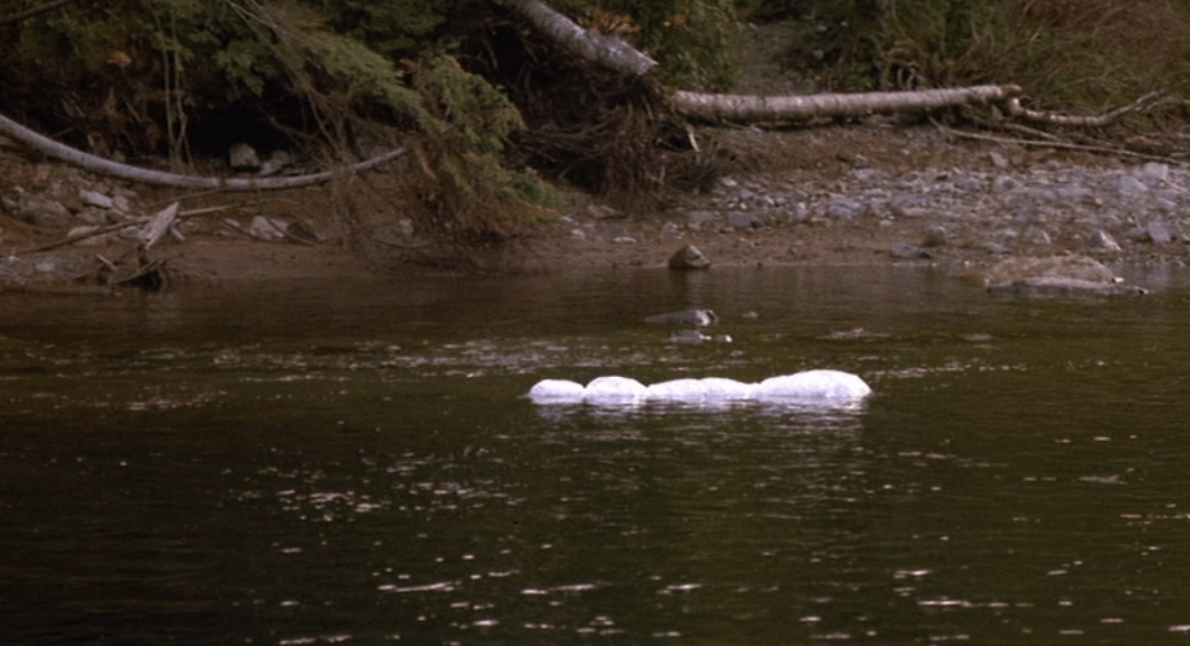
• First, the opening credits: They constitute an excellent example of the fact that this new season, while superficially different, retains at its core the exact same mythological roots as the original. Though the images appear different, the structure of the credits indeed remain stable. The only slight difference is the opening image of a rainbow bubble floating in front of Laura Palmer’s face.

vlcsnap-2017-05-27-14h44m42s358.png

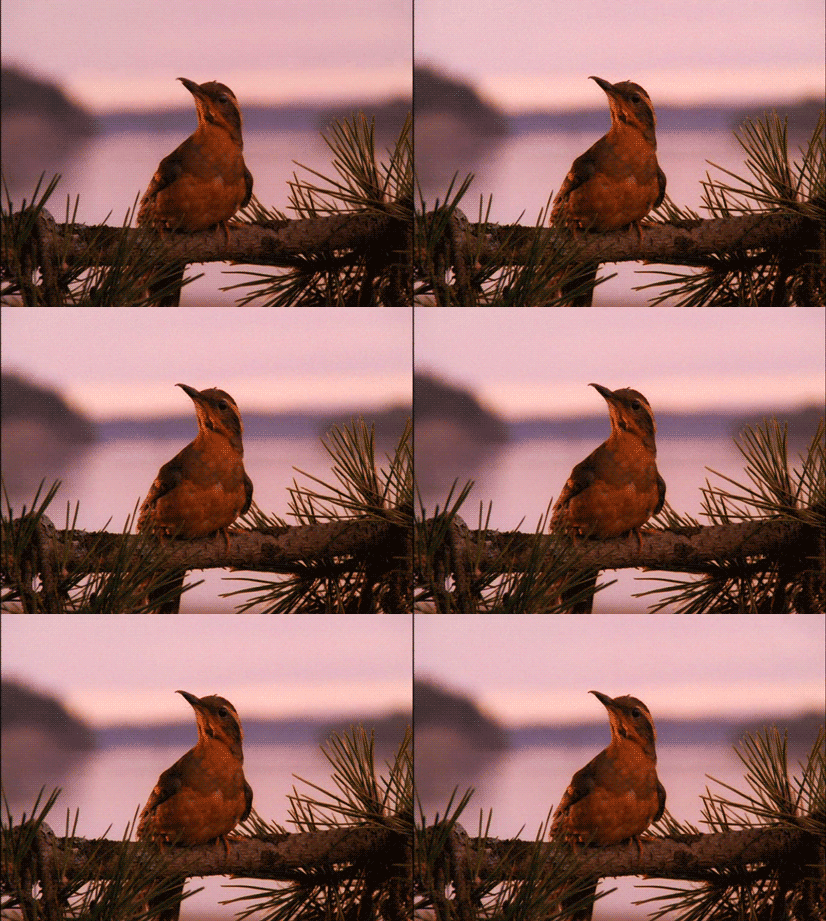
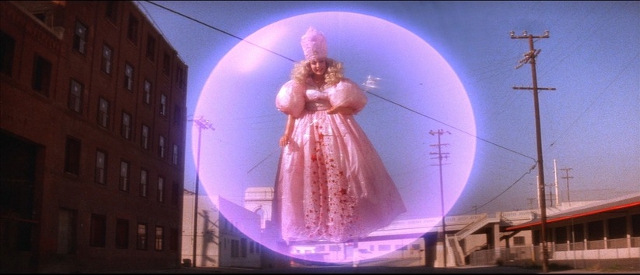
Although different from the bird that traditionally opened each episode of the 1990s series, one can argue that this rainbow is  not much of a change. It should be considered alongside the following image of Sheryl Lee as the Good Witch in Wild at Heart, floating in a similar bubble (the rainbow aspect of the bubble is surely not an accident in this context).
wild-at-heart18.jpg

In both cases, the bubble is associated with the air, with floating / flying, and as with the bird, one can guess that it is supposed to symbolize the “soul” of Laura Palmer “descending from pure air”, now that she has become a member of the Lodges.

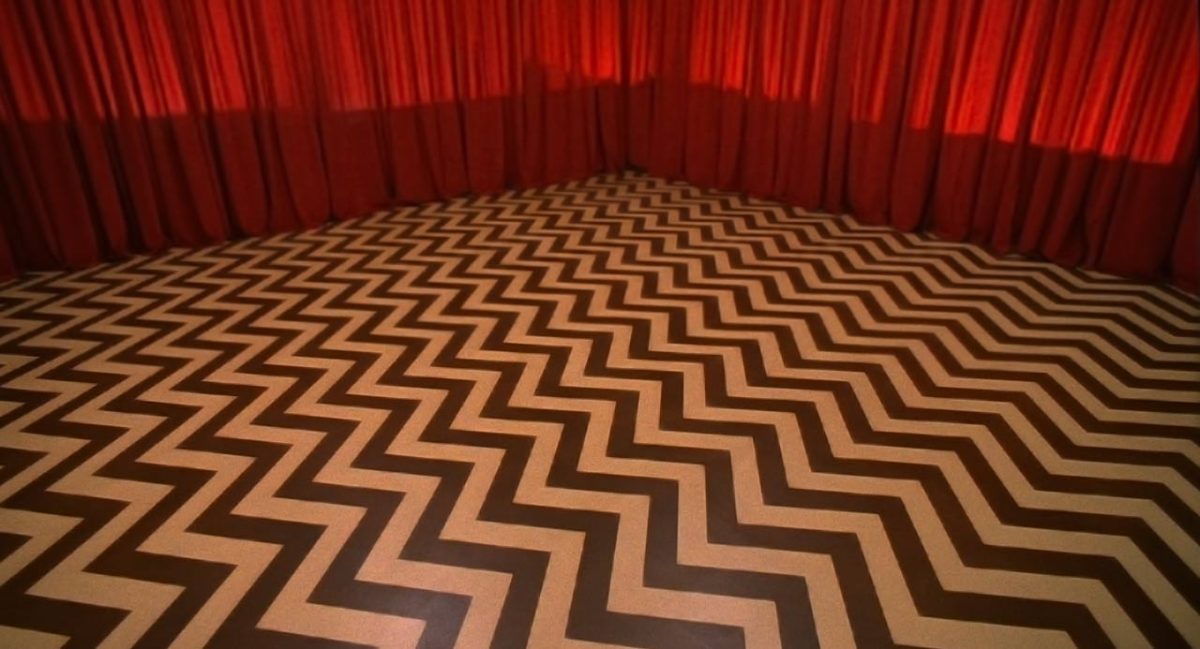
After this initial image, the sequence follows a movement which, though slightly modified compared to the original opening credits, maintains the same relationship to the four elements. It begins with a bird’s eye view from the forest that has come to symbolize the town (air & earth); continuing with another eye bird’s view (!) from above the waterfall neat the Great Northern Hotel (water), creating a round shape in the middle of the screen. This shot transforms into a vision of the fiery red drapes of the Lodges, which feel like they have been set in motion by the impact of the water or by a breeze (air & water & fire); and the credits finally end with a tracking, swirling shot of the chevron motif on the floor of the Lodges, clearly associating it with the four elements mentioned above, and perhaps more precisely with water and to the mysterious quintessence of Alchemy (see my book for more details about the meaning of the floor).

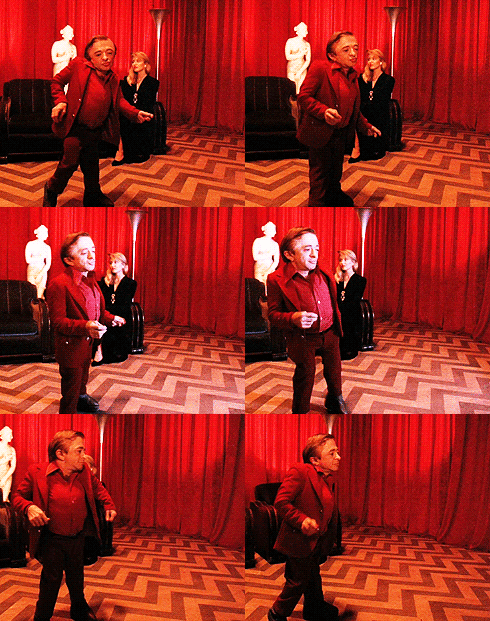
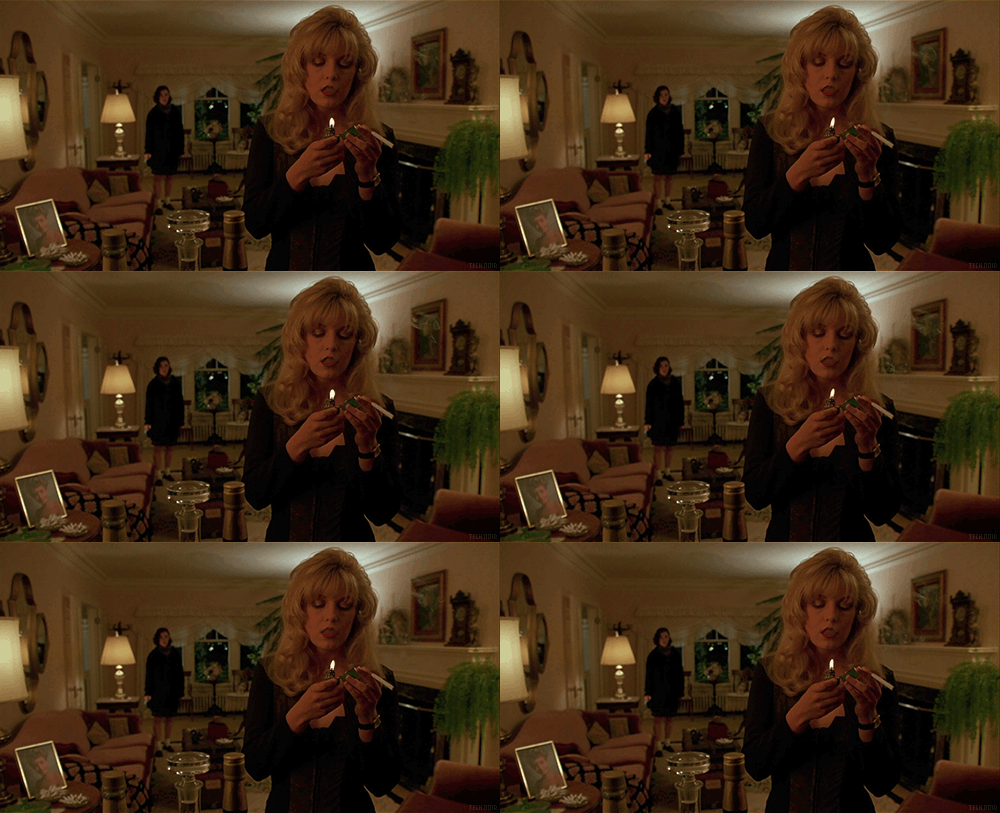
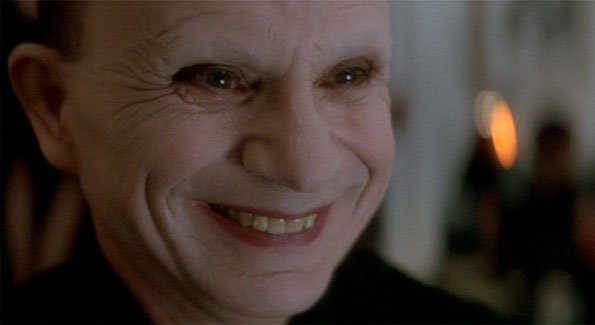
Here are the sequences from the new Twin Peaks, the 1990’s version, and Ruth, Roses and Revolver (a sequence from the film Dreams That Money Can Buy–see my previous post for more on David Lynch’s admiration of this film) placed side by side, following the order of the new series to visualize the air / earth / water / fire components:

• What should one make of the observation room set in New York and its glass box, continually watched by various video cameras and a young man seated on a sofa? What is this box? And why is it so important to warrant constant surveillance?

Glass box.png

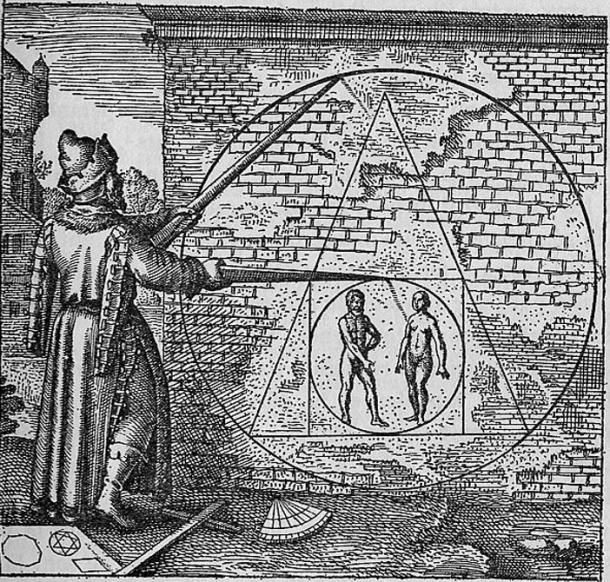
Once more, the answer to those questions may be related to The Great Art of Alchemy. When seen from the perspective of the young man, the box unites the various geometrical figures (circle, square, triangle) involved in “the squaring of the circle”, which was a process designed to created the philosopher’s stone.

The philosopher’s stone is described in such a way by one alchemist: [1.] Make of a man and woman a circle [2.] then a quadrangle [3.] out of this a triangle [4.] make again a circle, and you will have the Stone of the Wise. This was meant to symbolize the process followed by the Self through Matter towards Unity Enlightenment: 1) Self Area->Behavior Boundary 2) World Area->Law Boundary 3) Trinity Unity Area 4) Spirit Area.

In the new Twin Peaks, it is made clear that man/woman/spirits enter the box via the circle (the image is highly reminiscent of HAL from 2001: a Space Odyssey and its final “trip” through space-time), and that they move on later to a different realm towards the Spirit Area. The connection to higher realms has to take place in a vertical city like New York, a vertical relationship underlined by the various cardboard boxes piled up in the room and the city’s skyline visible at the outset. The four triangles on the cube form an X (X marks the spot) that enables communication between our level of reality and the Fourth Dimension, that of the Lodge entities (that “target X” appears again on the boxes concerning to Agent Cooper held by Hawk following the telephone call from the Log Lady, connecting that case to the Lodges).

This slideshow requires JavaScript.

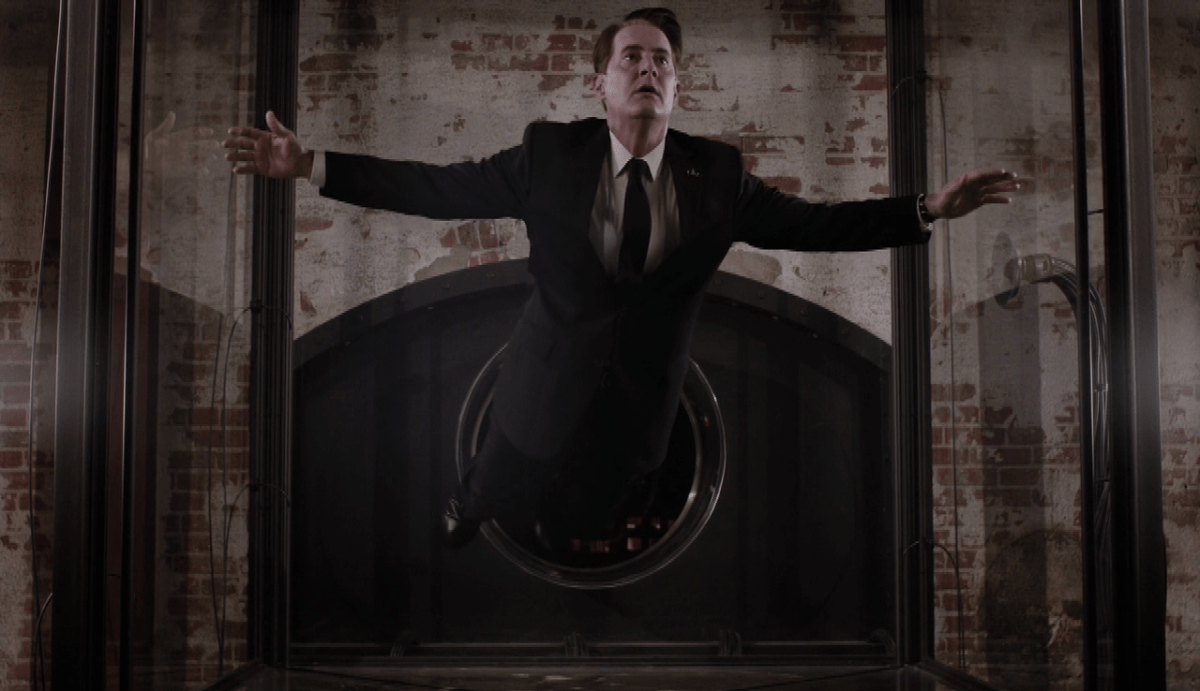
But why does the glass box need to be surveyed by someone constantly? It is interesting to note that the only moments that someone (or something) appears in the box are when the young man stops watching it, first when he goes to check on the guard at the entrance (Cooper “swims” in the box for a few seconds), and again when he makes out with Tracey (the demonic entity appears before killing them both). The answer to our question might lie within the realm of quantum physics and its notion of the observer effect. It refers to changes that the act of observation will make upon an observable phenomenon. It might be that the act of watching the box actually prevents entities from entering it, or traps them there.

This glass box is to be understood as a transdimensional aquarium in which entities from higher dimensions can transit. Caught outside the building by the X structure, thanks to the verticality of New York, brought inside the building with the help of the tube/circle, they can briefly be kept there to be examined by the cameras, as long as no one physically watches. Why would someone be asked to constantly watch the box, then? Perhaps to prevent the appearance of such entities in our world, using the box as a lightning rod (the electrical fire).

• The subject of electrical fire brings me to discuss the sequence in episode three during which the good Dale leaves the ocean’s “lighthouse” for Las Vegas. Set on the ocean of consciousness, this tower seems to be the equivalent of one of our lighthouses – except that it is manned by a blind woman (or rather, it seems that her eyelids have been sewn shut) and does not function with light, but with electromagnetism. This likely makes sense in the Fourth Dimension of the Lodge entities where everything is connected to electricity.

Inside the tower, in the room with the chimney and the blue rose, Dale finds a strange device on the wall. Numbers appear on its surface: first, 15, associated with danger by the tower’s blind resident who signals a cut throat when Dale approaches the device. This  number is followed by 3, once the electromagnetic beacon has been disconnected. Dale uses the device to leave the tower. It seems that he was destined to reach South Dakota and the car his doppelgänger was driving via the electric fire of the cigarette lighter, but due to an accident that disconnects the power of the car, he is sent instead to Las Vegas where he takes Dougie Jones’ place. Dougie is the first to vomit (Garmonbozia?), as the bad Cooper is able to hold it in long enough so that the exchange does not take place with him. The good Dale is then seen traveling as a tube of smoke towards Dougie’s vomit on the floor.

What about the numbers on the tower’s wall device? Could they be linked to the intensity of the current, 15 being much too dangerous for transportation? Since this location appears to be a transdimensional knot, my own take is that entities from the Fourth Dimension use it to travel to our 3 dimensional world. In order to reach the right destination, the electromagnetic power  first had to be disconnected, or at least diminished, which was done by lowering the handle on top of the tower.

• Another link to Alchemy might very well be found in the actions of Doctor Jacoby. He is basically turning the shovels he has ordered into gold. The reason why he is doing so remains unclear for the time being, but one can guess that he will try to unearth a treasure (perhaps one from the Treasure Island slot machine Dougie first sees when he enters the Casino in Las Vegas?).

• It is interesting to think about the tone of the new Twin Peaks and about the possible connections to be made with other filmmakers’ works. As far as I am concerned, without listing all the influences I observed during the first four episodes, two directors (as well as perhaps Guy Maddin for the third episode) came to my mind in relationship to the images and themes developed so far. Visually speaking, I was struck by a certain resemblance in the third episode to the films of Patrick Bokanowksi, a French experimental filmmaker, and especially to his movie L’Ange.

L’Ange (Patrick Bokanowksi – 1982)

From a thematic point of view, the links with the filmography of Tim Burton are strong, particularly in relationship to the character of Edward Scissorhands, whose childish behavior when confronted with everyday life is strongly reminiscent of Cooper as Dougie, who also behaves like a small child, an innocent newborn of sorts who needs to learn again how to dress himself, how to speak, how to eat, etc. The fact that he lives in Las Vegas, the most childish American city akin to a Disneyland for “adults”, is telling.

LV1.png
Searching for a tropical treasure in the adult Disneyland of Las Vegas

His quest for a home is very similar to Edward’s (but also to Ulysses, whose Odyssey might have a lot to do with Cooper’s). David Lynch’s cinema has always been slightly regressive in the sense that it is obsessed with a lost Golden Age (the 50s), with the mother’s womb (when Cooper enters the aquarium, he floats like a baby in the placenta), with what comes “before”. Dougie might not be his first infantile character (the Elephant Man also behaved in such a way), but he might be the most obvious so far. One could also say that the character is a nod to the past of Lynch’s own filmography, Dougie sharing much in common with Henry from Eraserhead.

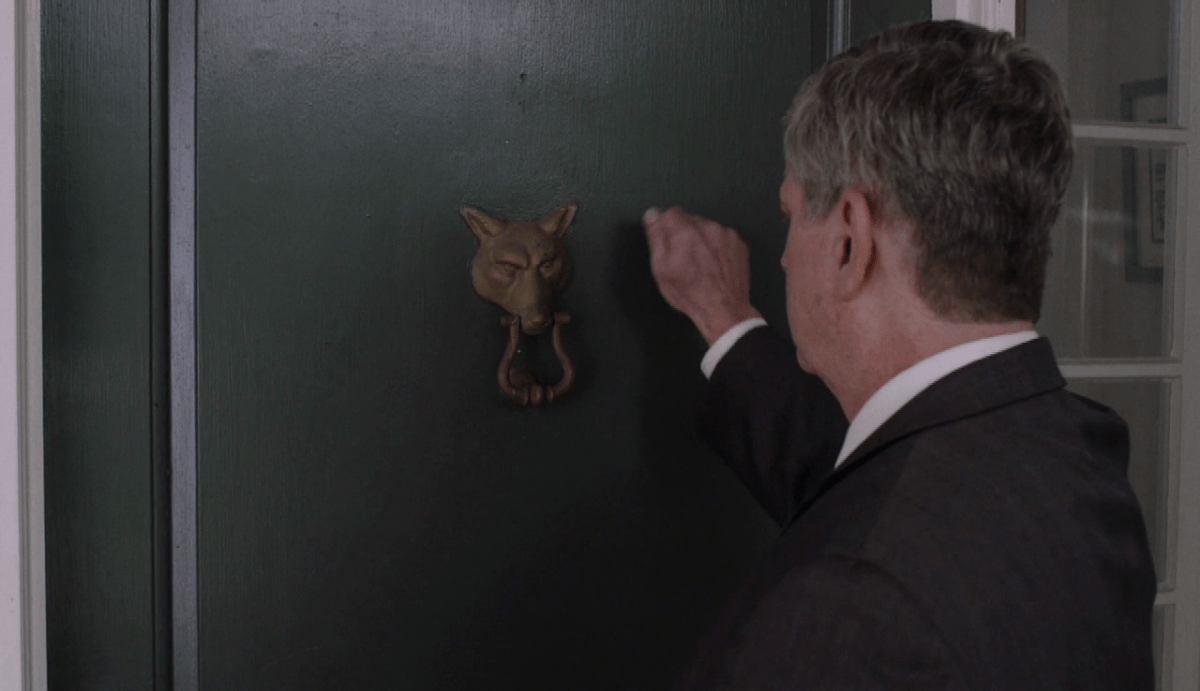
• The fairy tale elements that I have listed in my book are still present, perhaps even more obvious. In episode one when the police come to William Hasting’s home to arrest him, we find that this killer has a door knocker in the shape of a wolf. The big bad wolf is still hiding under a costume, wearing the mask of a respectable high school principal in order to collect its Garmonbozia.
Wolf.png

• Numerous moments found in the new Twin Peaks are reminiscent of images from the films of David Lynch, particularly Dune and Eraserhead. Some examples:

This slideshow requires JavaScript.

• Gordon Cole’s inability to hear properly, which causes him to change the meaning of what is being said reminds me of The Adventures of Tintin. Aside from the fact that one famous adventure of the Belgian reporter took place in Tibet, many parallels seem to exist between the two sets of main characters even if it’s unlikely that Frost/Lynch are familiar with the celebrated Belgian comic: Cole/Professor Calculus are both hard of hearing; Tintin/Dale are both innocent seekers of the truth; Albert/Captain Haddock tend to speak their mind loudly; Thomson and Thompson are a good example of the omnipresent theme of duality and dopplegängers in Twin Peaks

• By the way, what is Franz Kafka doing hanging in Gordon Cole’s office? Is Tamara Preston going to metamorphosize into something else? Or is it just a tribute to one of Lynch’s favorite authors?

Kafka.png

• Is it just me or is there something engraved inside the phonograph’s horn?

• Concerning aspects of the new series that I am less fond of, I can note at least two elements:

First, I tend to find the obligatory closing song at the Bang Bang Bar at the end of each episode a bit immature. Aside from the fact that one has the feeling that Lynch is simply providing a playlist of his favorite bands, and though the lyrics tend to echo what takes place in the series, the overall feel remains too MTV for my taste. These scenes are not filmed in a particularly creative manner and feel like a gimmick that the show could have done without. These moments are not unpleasant, but rather unsatisfactory.

My main problem with the new series is found in its depiction of women. The original series was already  a bit vain from this point of view, with (male heterosexual) fans debating endlessly about who might be the prettiest girl in Twin Peaks, as if they were in a candy store. One is totally free to have personal preferences, but this market of women approach has always seemed a bit objectifying to me. This time around, after four episodes, I have to say that I find the new series a bit disappointing from this point of view, especially after our TV screens have been graced with strong female characters such as Buffy, Carrie Mathison, Sarah Lund and countless others. I expect better of a 21st century series: not one single female character after four hours of viewing who contains much substance or embodies any central role, but several prostitutes of course and gratuitous stripping down (for women only). So far, Agent Tamara Preston has been very underwhelming as a character – the way she speaks and walks is more reminiscent of a playmate from Playboy than anything else.

Sadly enough, one could even argue that the most interesting female role so far has been the one of Denise Bryson… played by male actor, David Duchovny!

I hope that the upcoming episodes will provide more substance for the women of the cast.

Last but not least: only one single (live) owl in four episodes, that’s not enough!

OWL.png

Follow Unwrapping the Plastic: https://www.facebook.com/unwrappingtheplastic/
Song to the Siren

A river, a waterfall, a lake, an ocean of consciousness… Laura’s watery astrological sign (Cancer)… the chevron motif on the Lodge’s floor… the links to Max Ernst’s and his Une Semaine de Bonté

As much as fire and food, water is found everywhere in Twin Peaks.

It is even where one would least expect it – hidden in the names of the characters. But before analyzing this aspect of the show, first I’ll focus on other water motifs.

What is water? What does it do? “Scientists may call it an ‘essential substance’, which can be solid, liquid or gaseous, providing the main constituent of vegetable and animal cells as well as crystals and many minerals… all of the strange and important characteristics of water arise from the configuration of the three atoms in the molecule and the distribution of electrical  charge among them… enabling it to serve as an almost universal solvent” (all quotes by Helen Valborg, from HERMES Magazine).

Constantly moving, “it is an archetypal symbol for transmutation“.

With water, we are once more brought to the world of Alchemy. Water is the solvent which enables the transformation of (mental) lead into gold. “Water lubricates every aspect of the wheel of life“. The process of individuation needs it so as to reach its “golden” destination. Without water, there is no life possible (of the body and of the mind): “Water is always feminine, the ‘Mother’ out of which all life comes. She is Chaos, primordial substance, and Gangetic flood… The Secret Doctrine tells us that hydrogen was the earliest existing form of matter and, together with oxygen, it instills the fire of life into the Mother through the process of incubation… This echoes the occult teaching about ‘the Fiery Wind’ whose ‘fire’ may be traced on a more phenomenal plane in the combustion of hydrogen by oxygen”.

wind.jpg

Water, fire, wind… All of this should sound very familiar to any Twin Peaks fan. When BOB – often associated with the (fiery) wind in The Secret Diary of Laura Palmer – gives his victims to the river (a symbol of fertility and the irreversible passage of time: “the inexorable repetitiveness of the water’s movement imbues one with an impression of timelessness“), he might very well be “instilling the fire of life into the Mother”. The ritual sacrifice he commits in doing so is able to generate an offspring, a crop: Garmonbozia.

But where does water come from and where does it go? “We see the waters as they emerge but we are often ignorant of the unseen developments that engaged them when they first percolated into the earth’s rocky structure” (here, I’m tempted to add: “There was a fish in the percolator!“). In Twin Peaks, the waters might very well originate in the Lodges (at least from a symbolic/metaphysical/noumenal point of view). The Lodges appear to be closer to Unity, to that place at the roots of the Cosmic Tree from which the phenomenal world emanates. The floor of the Lodges with its chevron motifs is a visual reminder of their watery essence (this becomes even clearer in the new episodes we are seeing unfold in the third season) – they are the place of the “ocean of consciousness” dear to David Lynch and Transcendental Meditation. This can also be understood from a psychoanalytical point of view in that waters originate in the unconscious, at the root of the conscious mind, the place where archetypes – which can be associated with Lodges entities – reside.

As for the place where these waters flow now, first, they become a river that cascades downward near the Great Northern Hotel (in a process that reminds us of the collision between the Fourth Dimension and our reality – more on that in a future post: Cube falling through a plane) before ending their course in the Black Lake. “The name ‘river’ comes from rivus or rive, indicating ‘a splitting asunder’… the river literally divides the earth… symbolically it divides the world of the living from that of the dead“. A good example of this would be the River Styx, in Greco-Roman mythology. It is clear in Twin Peaks that once a body/log is fed to the river, that person never comes back to the world of the living. It enters a new dimension.

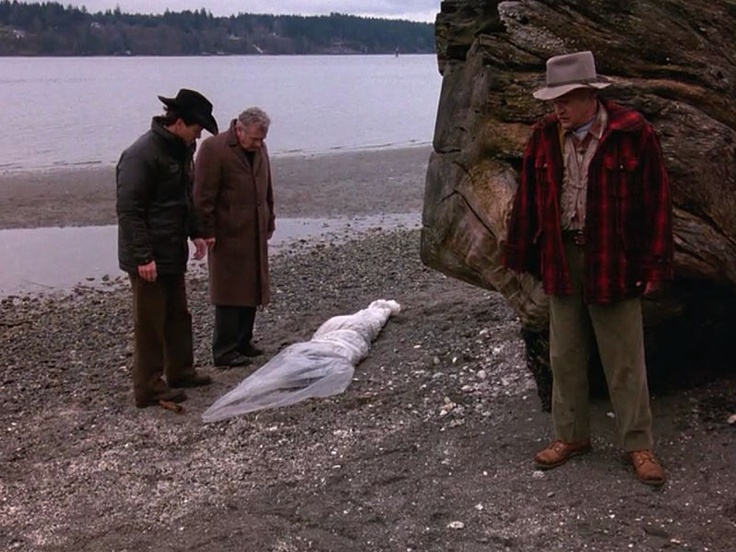
This is what happens to Laura Palmer. She is washed ashore on the banks of Black Lake, a Lady of the Lake of sorts – Arthurian mythology is not far below the surface of Twin Peaks. Links to Glastonbury are actually discussed in the last episode of season 2 and the Bookhouse Boys’ patch with its sword in a tree can also be read as a reference to Arthurian lore.

lady.jpg
The Lady of the Lake
bookhouse
Excalibur – the magic sword

Dale Cooper, knight to “Laura of the Lake”, follows her into the body of water towards the Red Room. “The critical factor distinguishing a lake is that it is completely surrounded by land, with no direct communication with the sea” (one could even say that it’s an “Inland Empire” of sorts…). In Twin Peaks the ocean (of consciousness) is where everything starts, where one catches “big fish”. Black Lake is downstream from that primordial ocean, down the path of duality. “For many people water has always suggested a connection between the superficial and the profound, a transparent, fluidic mass which conceals and yet reveals the way to another world. The lake embodies this in its fearful depths as well as on its glittering surface. It is profoundly feminine, being the humid spawning place of monsters and magical female power, and yet the image of self-contemplation, consciousness and revelation…. sometimes becoming the means of transition between life and oblivion, form and formlessness, solidity and fluidity“. In that sense, it can be understood as a mirror of the mind, as the reflections on its surface during the original opening credits of the series indicate: “It is a mirror into which the mind is readily drawn to receive a broader picture of reality. In its water the past lies alongside the present and the above is mirrored in below. Atomic particles float freely to shape images known only in other worlds, and long-forgotten memories surface to float for a moment beside embryos of ideation in their pre-natal state“. This special relationship to time is of course highly reminiscent of what happens in the Lodges.

figure-13

Not all rivers end up in a lake, though: “Some believe that the Ganges enters Patala, the nether world which is no end but only the other side of the cycle of life and death“. Interestingly enough, some argue that Patala (the subterranean realm situated under the earth in Indian religions) might be found somewhere… in South America, the continent where Buenos Aires is situated and where agent Phillip (friend of horses) Jeffries (territory/foreign/hostage – peace) mysteriously disappeared in 1987.

SevenTalas.png

This connection between water and what lies below the earth (usually associated to magma, or Hell) can further be explained by the fact that H2O is sometimes described as “liquid fire”: “Water quenches fire but we are taught that water is liquid fire. Light, flame, heat, cold, fire and water are the ‘progeny’ or correlations of electricity, the web of the One Life itself… The progeny of electricity are infinite. Foremost is fire as creator, preserver and destroyer, then light which is the essence of the divine ancestors, and flame, which is the soul. Light incubates water which fuses with earth, as Moses taught, to bring a living soul. Light and flame in and through fire and water receive, conduct and dissolve, at each stage of the manifesting triads“.

One can actually visualize the process of water being turned into fire (though, fundamentally, they are thought to be one and the same) in the new credits of Twin Peaks, all of this being the result of the (watery and fiery) electrical flow which then appears on the floor of the Lodges.

So, in a way, one could say that water, fire (should we say instead: the fiery wind?) and electricity are “one and the same” (remember that cryptic and famous line from the last episode of season 2?).

This slideshow requires JavaScript.

Here is another quote which sums up what one needs to keep in mind when water appears in Twin Peaks: “Water symbolizes transmutation, the ocean of the unconscious, the abyss of mystery and intuition. It is a veil of the One Fire of Atman, a mediator between life and death, with its positive and negative flow of creation and destruction. The entrance to the Spirit-world is typically described in terms of crossing a river or immersing oneself into a body of water“.

As always, when it comes to symbols associated with Alchemy, Transcendental Meditation or Theosophy, everything should also be understood in relationship to the mental development of human beings. These images are really images of the mind (of the characters) and of their progress along the path of individuation: “The microcosm of the macrocosm is man, and he contains, like the globe itself, his own ocean. In his body there are at least thirty quarts of water inside the cells, and these make up seven-tenth of his total weight… Life in the womb before birth is aquatic“. If the flow of consciousness is somehow blocked, one takes the following risk: “Water dammed up and hoarded will grow stagnant, but given freely will nourish, gain strength and purity in its onward rush

vlcsnap-2017-05-24-11h53m42s312.png
Cooper in the aquarium / womb / transdimensional & alchemical glass box

Once caught in a stream, one should be careful about the treacherous currents which could drag them under the water. In relationship to what was just said about Patala as the underworld / the southern hemisphere, it is interesting to read the following lines which connect the watery element to another recurring motif in the films of David Lynch, the spiral: “To its north (the belt of the earth) water drains in a spiral, moving counter-clockwise,  while to its south it does the opposite. The counter-clockwise motion signifies the fall of spirit into matter, whereas the opposite represents its ascendanceAs a river ceases its youthful rush downhill, drawn on by gravity, the combination of forward and sideward flow produces a spiral movement… the river’s current assumes the same serpentine pattern that describes the movement of all manifested energy“.

figure-18
The counter-clockwise spiral, or the fall of spirit into matter…

In David Lynch’s mind at least, it is likely that all these streams and rivers originate and eventually lead to what the Maharishi Mahesh Yogi, the founder of Transcendental Meditation, calls “the ocean of consciousness”: “The reality of the universe is one unbounded ocean of consciousness in motion“. It is probably that reality that Cooper visualizes when he falls from the Lodges to a realm situated inside a milky cloud. The ocean he then discovers appears directly related to consciousness, the underlying reality of the universe. When he climbs to the top of the building via a ladder, he appears to be sailing on a small raft on an endless cosmic sea, with a rocking motion…

Returning to the idea of water hidden in the very name of the characters in Twin Peaks: the names there are not chosen randomly, they are vectors of meaning (just like water, in a sense). An etymological approach to these names is enlightening concerning what they are supposed to represent in the show, beginning with Laura Palmer’s name, analyzed earlier on this blog and in my book as well.

How about Annie Blackburn? Annie stands for “grace”, but Blackburn means “dark-colored stream“. Then we have Norma Jenning’s new father (featured in Mark Frost’s book, not the same one as in the original series, which might explain the absence of Annie): Marty is derived from “Mars”, the god of war) and Lindstrom from “linden stream“. Beverley Paige, Ben Horne’s new assistant, means “beaver stream” and “young helper”. One can also list Ruth (“sorrowful”, which might explain why she was killed) Davenport (“harbor on a trickling stream“); Douglas Milford’s given name stands for “dark water” (this might also explain Agent Cooper’s interest in Douglas firs); and of course there is Dougie Jones (“John’s child”, with another slang-like meaning linking it to addiction –> Cooper indeed becomes a child again when he becomes Jones).

I’ll conclude by quickly mentioning another sort of water, tears: “May the disciple who would seek Nirvina light within himself the golden flame of Akashic Fire…. May he build high the fire of tapas within him until his pain and longing are converted into sweet and compassionate tears that may flow in abundance for all humanity“.

This slideshow requires JavaScript.

Follow Unwrapping the Plastic: https://www.facebook.com/unwrappingtheplastic/

Children of the Corn

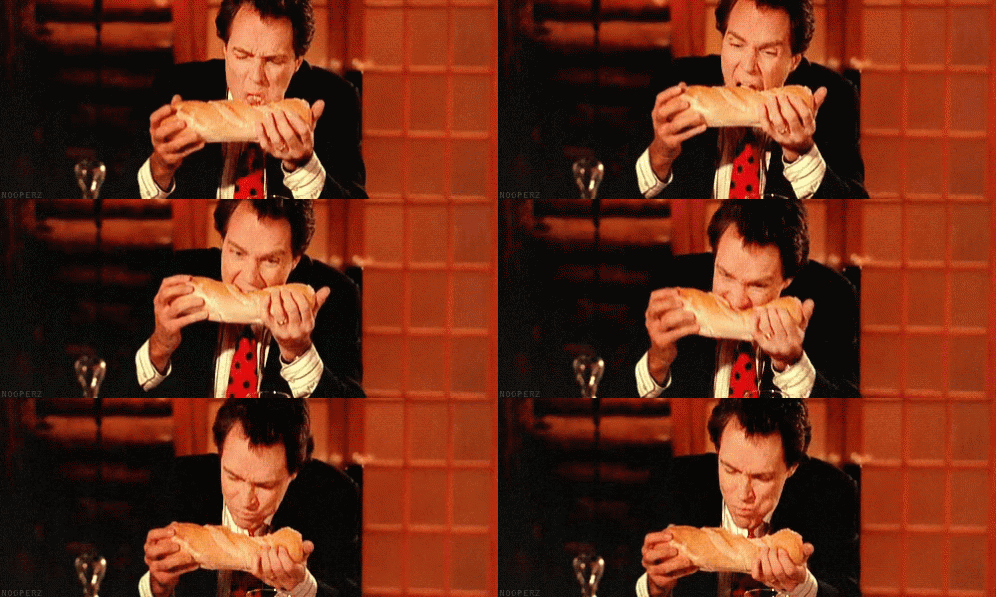
Foods of all sorts play a central role in the world of Twin Peaks, from delicious black coffee to sweet cherry pies, from donuts to tasty French baguettes. Only hospital food serves as a counter example to the endless culinary delights of Twin Peaks. The regressive joy of devouring constitutes one of the main pleasures to be found there – that is, until the devourers find out that they themselves are about to be devoured by someone or by something else. Where there is abundant food, there are also abundant predators. To quote Joseph Campbell: “Life lives on life”.

tenor

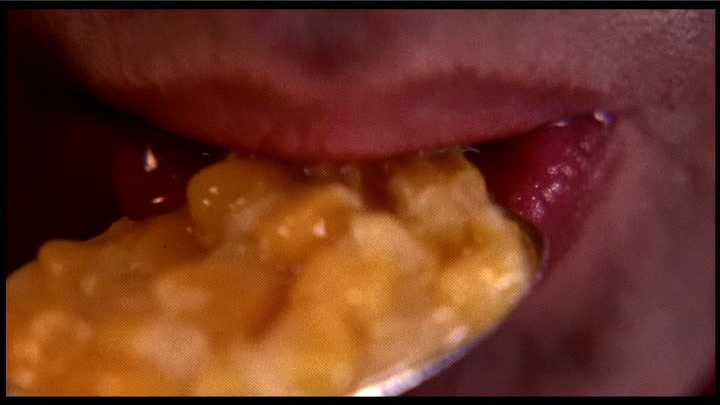
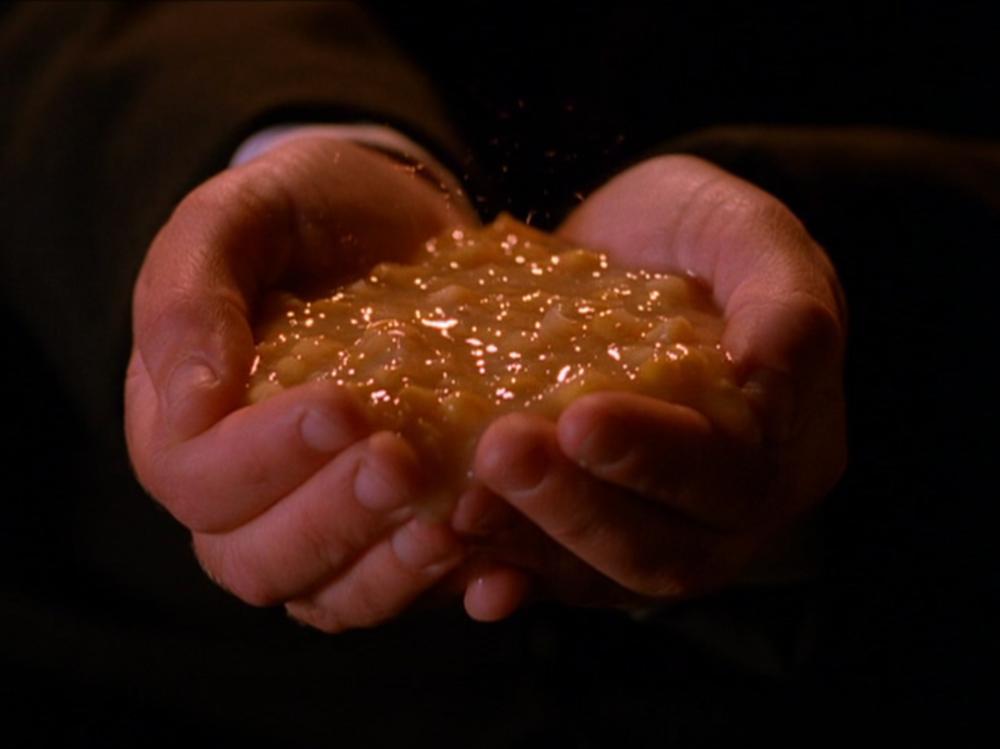
But no other food plays a more crucial role in this universe than (creamed) corn, otherwise known as Garmonbozia. One could even argue that it is what sets the whole story in motion. Without it, Laura Palmer would not have been killed in order to collect her “pain and sorrow”. This harvest is directly responsible for the FBI investigation that follows her murder and for the series itself.

corn 2

What is so special about Garmonbozia, apart from the fact that it is apparently the only food eaten (sucked) by the Lodge entities? And why is it depicted as (creamed) corn?

In order to answer these questions, recall that “Maize, along with tobacco, pumpkins and succoquatash, was a native of the New World… the Indian grain” (all quotes from articles written by Helen Valbord for HERMES Magazine). I have described the Lodge entities in an earlier post as “the White Indians from Lemuria” and their strong links to Native American imagery on several levels, including that of corn’s symbolism: “To the Indians of the New World, spiritual life and the life of flesh were reflecting counterparts of one another in that midmost place. The breath of Spirit breathed in the corn like the Mayan wife who blows on her kernels before grinding them into meal. Wherever corn grew in the Americas it was held by the people to be the symbol of life and fertility… It was the spirit of the seed of eternal life, and frequently the umbilical cord of a newborn child was cut over an ear of corn“.

Once again, as in alchemy – with the rejuvenating powers of its philosopher’s stone – the concept of immortality comes forth. Besides its ability to produce the elixir of life, this stone is supposed to turn base metals into gold – the colour of corn. Yellow is the colour of gold and of corn, but if we believe the following extract from Zuni Cosmology: “Sky-father… set the semblance of shining yellow corn grains. In the dark of the early word-dawn they gleamed like sparks of fire“.

Garmonbozia’s connection to gold and fire through corn appears clear, as does its link to immortality. Garmonbozia seems to be a sort of Soma (a Vedic ritual drink of historic importance among East Indians). The following quote is taken from the Rigveda: “We have drunk soma and become immortal; we have attained the light the Gods discovered. Now what may foeman’s malice do to harm us? What, O Immortal, mortal man’s deception?“. Perhaps even closer to Garmonbozia then Soma is Armita, referred to in texts as “nectar”, the equivalent of the greco-roman Ambrosia.

This food is what differentiates the Lodge entities from the rest of humanity. It makes them immortal, it keeps them “above the convenience store” (our reality), as the gods who used to dwell on Mount Olympus in classical Greece. Their ability to travel through the Fourth dimension via electrical fire, their capacity to “square the circle” (to create the Philosopher’s stone), makes them all powerful in our realm.

Stone
Philosopher’s stone as pictured in Atalanta Fugiens Emblem 21

This vision of immortality contrasts somehow with the theme of sacrifice which also underlines Twin Peaks in general, and Laura Palmer’s story in particular (in Twin Peaks: Fire Walk With Me, she tells James: “I’m gone. Long gone. Like a turkey in the corn” – she knows that she is soon going to be served as the main dish, a sacrifice to the gods, another clear reference with Thanksgiving – blessing of the harvest – to the links with Native American symbolism).

A Native American deity known as Mondamin is interesting in this context. This god of maize “was dressed in brilliant green, with waving plumes adorning his raven hair… Ojibwa children were taught to dream and they knew the law of sacrifice that governs the manifest world through such legends and through their own strivings when they too would seek a vision. Like the Hindu Purusha, who archetypally sacrificed himself in a thousand pieces so that life in all its fragmented variety might unfold, so Mondanin in a more particularized way sacrificed himself so that men could sustain themselves and flourish“.

Closer to Europe, one can also find a link between deities symbolizing life, fertility and self-sacrifice: “Though personified as Demeter and given its cyclic characterization as her daughter Persephone, corn remained from archaic ages the impersonal yet concrete symbol of the force at the heart of the cosmic and terrestrial evolution. When cornmeal is offered in prayer it is an offering of the flesh. But being a divinely created food, it is also a sign of spiritual thanksgiving“.

This slideshow requires JavaScript.

Interestingly, “Europeans gave the maize to cows, pigs and chicken who thrived on it, and aligned their own appetites with the more refined products of Old World grains“. I have already mentioned in several previous posts how the Lodge entities are associated with birds of all sorts (if only due to Max Ernst’s influence on the visual look of the Lodges) and the fact that their food of predilection is corn makes perfect sense.

giphy1
In Hinduism, the Gandharvas are male nature spirits. Some are part animal, usually a bird or horse. (Wikipedia)
giphy2
They have superb musical skills. They guarded the Soma and made beautiful music for the gods in their palaces. Gandharvas act as messengers between the gods and humans. They are mentioned extensively in the epic Mahabharata as associated with the Devas (as dancers and singers). (Wikipedia)

Why is it “creamed” corn, though? Probably because everything in Twin Peaks is sugary, producing a regression to a childish state of development in synch with the fairy tale aspects of the show. As in Hansel and Gretel, houses are made of candy in Twin Peaks. Perhaps this is so as to make its inhabitants forget that some of them are going to be eaten by cannibalistic witches/big bad wolves/Lodge entities…

Hänsel.jpg
Hänsel and Gretel (Lotte Reiniger – 1955)

The fact that BOB stole their supply of Garmonbozia from the other Lodge entities is also interesting. Once more, this might very well be linked to Hindu mythology and to the competition for power between the demonic Asuras and the more benevolent Devas. This is what we find about them on Wikipedia: “Each Asura and Deva emerges from the same father (Prajapati), share the same residence (Loka), eat together the same food and drinks (Soma), and have innate potential, knowledge and special powers in Hindu mythology; the only thing that distinguishes “Asura who become Deva” from “Asura who remain Asura” is intent, action and choices they make in their mythic lives“.

Before continuing, it is important to note here that it is not as far fetched as it may seem that David Lynch could have had Devas and Asuras in mind when he created the Lodge entities. In her book David Lynch Swerves (2013), Martha Nochimson notes that Lynch told her about his interest in the Hindu demons called Raksashas (also called Maneaters).

devas.JPG
Devas and Asuras on either sides of Vishnu

This common living space and shared food between the Devas and Asuras is highly reminiscent of the Lodge entities. It does seem that some of the entities are more benevolent than others (MIKE, the Giant, the waiter), while others obviously have a much darker side (BOB). But not everything is black and white (though Devas symbolize light and Asuras darkness in Hindu mythology). Or if it is, it is similar in a way to the chevron motif on the Lodges’ floor: winding and far from straightforward (at least from a three dimensional perspective).

The definition found on Wikipedia continues: “Asuras who remain Asuras” share the character of powerful beings obsessed with their craving for ill gotten Soma and wealth, ego, anger, unprincipled nature, force and violence. Further, when they lose, miss or don’t get what they want because they were distracted by their cravings, the “Asuras who remain Asuras” question, challenge and attack the “”Asuras who become Devas” to loot and get a share from what Devas have and they don’t, in Hindu mythology. The hostility between the two is the source of extensive legends, tales and literature in Hinduism; however, many texts discuss their hostility in neutral terms and without explicit moral connotations or condemnation“.

One can assume that this is what happened between BOB and the rest of the Lodge entities. Being an “Asura who remained an Asura”, he looted the others so as to get their Garmonbozia. Being ordered to get Laura’s Garmonbozia is probably a way to restore the balance between the two types of deities, “without explicit moral condemnation”. Actually, when the decision is made, neither MIKE nor the Giant or the waiter (the true Devas) are present above the convenience store.

TP_above-the-convenience-store-A.png
Where are MIKE, the waiter and the Giant…?

According to Coomaraswamy’s interpretation of Devas and Asuras, both these natures exist in each human being, the tyrant and the angel is within each being, the best and the worst within each person struggles before choices and one’s own nature, and the Hindu formulation of Devas and Asuras is an eternal dance between these within each person“. In Twin Peaks, Laura and Dale both took that dance – and while Laura succeeded in freeing herself from her dark partner, Dale waltzed directly to the Black Lodge, leaving the dance floor to his doppelgänger.

Finally, to return to corn, mirroring the symbolic fight between Asuras and Devas, “corn served as the first staff of life for all the races that made the New World their home. It thus provided a symbolic and biological keynote for the spiritual and physical evolution that has subsequently taken place and that can take place in the future… Let us see within the coarse and overgrown commonness of ourselves or our fellow man the pure breath of sacrifice that nourishes and strengthens and reveals the divine Purusha who is, was and shall ever be“.

 Follow Unwrapping the Plastic: https://www.facebook.com/unwrappingtheplastic/

Fight Fire With Fire

The world of Twin Peaks in the Pacific Northwest is generally a cold and damp place. But it is a cold place with a lot of fire – lots of fires, to be precise. Far from being easily contained, this primordial element spreads from place to place and knows several forms in the universe created by David Lynch and Mark Frost. From the sparks that fly off the Packard Sawmill during the opening credits to the flames that consume Laura on the inside; from the forest fire that took the life of the Log Lady’s husband to the fury that burns in the eyes of Leland…

vlcsnap-2017-05-02-14h41m57s709.png
“When this kind of fire starts, it is very hard to put out. The tender boughs of innocence burn first, and the wind rises, and then all goodness is in jeopardy”

Because of its many faces, because of its ability to mutate and devour everything it touches, it is not far-fetched to affirm that Twin Peaks really walks with fire.

fire me

Here is what one finds on the subject of fire in the Theosophist literature (all the quotes come from various articles written by Helen Valborg for HERMES magazine in the 1970s and 1980s): Fire eats everything. His three ‘sons’ are Pavaka (Purifier), representing electric or vaidyuta fire, Pavamana (Purifying), or the fire of friction, and Suchi (Purity), the solar fire… His three forms – the sun, lightning and fire – become ‘the structural presences of the cosmos and of the inner life of men‘.

Fire.jpg
From the book “Agni – Way of Fire” (Bruce Lyon)

It might be difficult today to remember that electricity (the electric fire), when it was first domesticated by humans in the 19th Century, was seen by some as an occult force. Thanks to its power, it suddenly became possible for humans, though distant by thousands of miles, to speak to each other via a telephone as if they were in the same room. This power (among others) turned the dream of ubiquity into a reality (as in Lost Highway, when the Mystery Man asks Fred Madison to call him at his own house – when he’s actually standing in front of him, at a party, far away from it).

MM

“I’m at your house, right now”

Electricity’s fire is directly connected to that of lightening, a terrifying and instantaneous bridge between two worlds: “the extraordinary mediating role of lightening in its awesome descent from heaven to earth, where it becomes fire as we know it“. The entities from the Lodges definitely walk with fire because of their intimate relationship with electricity (‘we have descended from pure air), which in turn connects them to the world of the occult. This is also why their relationship to time is far different from ours, because of the near elimination of the time factor implied by electricity: “it is only through the interruptions of the current (produced by dots and dashes or by voice modulations) that the element of time is made apparent“.

It is important to note the movement implied by lightening/electricity/fire. It is a force that sets things in motion: fire walk with me. “The One Supreme, in three aspects, pervades the universe and vivifies it, yet remains unmanifest… When differentiated, it becomes Fohat which, together with its seven offshoots, is the cause and effect of Cosmic Electricity… the animating principle electrifying every atom into life… the cosmic energy which produces the differentiation of the primordial cosmic matter… All that exists in the universe contains and is electricity… Fohat divides into two parts (male and female) to create the manifested universe… This forms the basis for the world, motion being inseparable from heat, leading to archetypal expansion, the dissociation of relatively homogeneous and ethereal molecules, and their recombinations, producing slightly altered ‘knots’ of energy which whirl and cool according to the fluctuations of Agni’s breath… air is fluidic fire, water is liquid fire and earth is solid fire… “.

It is no wonder that The Man From Another Place or Leland (when possessed by BOB) dance so much – they are constantly connected to the flow of electricity, the “animating principle” mentioned above. According to Valborg: “The intuitive investigator J.W. Keely called electricity ‘a certain form of atomic vibration‘”. The chevron pattern of the floor of the Lodges is a clear representation of this electrical vibration, of this liquid fire.

liquid fire
Liquid (electrical) fire

In other words, fire is what sets the universe in motion, a motion that generates heat: “All life is in fiery motion producing heat… Electricity and magnetism are, in essence, the differentiated aspects of Universal Motion, and light and heat are but shadows of matter in motion on grosser planes”“. Similar to the saws that cut the Cosmic Tree in the Packard Sawmill, fire divides the original unity of the universe into a plurality. Fire is what gives form to the world. But Valborg adds: “all the wonderful technology men have developed by means of Agni’s heat and electricity are merely shadows of the incalculable enlightenment and development that characterizes the awakened human mind“.

Figure 9

The divinity associated with fire by the Theosophists is the Hindu god Agni, the Vedic fire god. Agni is the Devourer, and he is generally considered to be the mouth of the gods and goddesses. He is the medium that conveys offerings to them. Fire and food, cherry pies and coffee, pain, sorrow and Garmonbozia…

Agni_god_of_fire
Agni, god of fire, riding a ram

Directly connected to the world of Twin Peaks is the following quote: “Agni may take the form of a bird who then flies down from the realm of the gods to earth. This theme is widespread in the world and often figures in myths about the divine gift of fire to human beings“. This Promethean fire bird might very well be the one that appears at the beginning of every episode of the series. Fire comes from the sky, fire is in the air… or, to quote the title of an album David Lynch recorded in 2007, The Air Is on Fire

giphy1

The connection between lightening/electricity/fire and trees/wood is self-evident. The forest fire in which the newly wed Log Lady lost her husband has already been mentioned (for reference: Ronette Pulaski’s name was probably not chosen randomly since the Pulaski is a tool used in wildnerness firefighting…). But let us also remember that the domestication of fire started when humans had the idea to rub two pieces of wood together, the friction thus generated (one of the three ‘sons’ mentioned above) producing fire. “When one makes a resolve or takes a vow, Agni is enlivened and commences the work of burning out the dead wood of constricting thoughts and imprisoning behaviour“. Also remember Pierre Tremond, in the convenience store sequence, when he declares: “fell a tree” to BOB, the one who walks with fire.

tumblr_mp4g4u9whq1rvzc39o1_500
Friction

This link between the domestication of fire and the domus (house/home in Latin) is direct. Home is where the hearth is situated, the place where food is cooked and where the family protects itself from the elements. This is what Valborg has to say on the subject: “In ancient societies and in households still preserving a sense of the sacred connection between heaven and the domestic hearth, Agni is kept alive… such fires bring life to a household that cannot be provided by any other thing… In India, through the ashrama stages of life, Agni is carefully fed and reigns at the centre of the human struggle for individual and collective wisdom… All fires are sacred. All burn with the unalterable truth of Agni, and all must be used, fighting fire with fire, to purify the whole nature so that one can stand on the altar of the gods“.

twin-peaks-6

Figure 19
“As the Agnihotra or priest chanted the Rig Veda, he performed Paryagnikriya or circumambulation with fire. Around the altar fire of Agni he created a flaming fire ‘Pass-not’ as the gods proceeded to take possession of that which is sacrificed”

Once fire is domesticated, once humans have understood that they must make sacrifices to the gods through fire, they have to accept the fact that they very well might be the sacrifice in question: “Man lives, his crops grow and his hearth abounds with nourishing food, only to find that he too is food in the great cyclic return that revolves between heaven and earth. At each moment numberless forms of fire devour forms of life which are fuel. The sun itself shines by devouring its own substance… the universe is a constant sacrifice, the transformation of life into life. ‘To live is to devour life’, and on every level of the cosmos all is of the nature of fire and water, Agni and Soma, the Devourer and the Devoured“.

giphy-2
BOB turns Laura’s sacrificial blood into Garmonbozia

This great cycle of sacrifices is universal: “The entire cosmic process is essentially a sacrifice. To grow by giving is the universal law. Self fulfilment can only be achieved through self-immolation… The earth exists chiefly to serve as the place of sacrifice. It is only when this law is recognized and voluntarily followed that the kingdom of death can be traversed and immortality truly attained. The real soma-sacrifice requires the giving of the elemental self to the flames of the higher. The victim of the sacrifice is the sacrificer himself.”

gloves
Cooking gloves as a protection from spiritual fire for the uninitiated (once again, the link to food…)

This inner fire of immortality is the ultimate goal to be reached through the external fires: “With effort the meditator identifies the fires and feeds them with the fuel of his own impurities. He learns to practise controlled burning, gaining mastery over his physical and astral temperature only as a byproduct of a deeper process of mental alchemy”. 

Laura and Dale are the two main characters in Twin Peaks to have moved on from the external form of sacrifice to an internal one: “The exoteric ritual guarded by external priests is but a shadowy reflection of the fiery offering that must be made within the individual“. The Jungian process of individuation they have followed in the Red Room and elsewhere helped them turn the fires that were consuming them into ones that enlightened them. They moved from exterior to interior sacrifices so as to spiritualize their emotions.

Laura went one step beyond, though: she accepted the final sacrifice in that process when she took the ring, sacrificing her own life to get there. Dale, on the contrary, stopped one step away from the goal. He was not utterly ready to feed the fire with the fuel of his own impurities because of his fear. Laura and Dale’s minds can be seen as fiery devourers, the objects of their thoughts becoming the devoured. On the other hand, Windom Earle’s refusal to sacrifice himself in the process, his desire to sacrifice someone else to get there, could only lead to the complete cremation of his soul. Unwilling to feed the fire with his own impurities, it is his very soul that got burnt instead.

windomdies
“The soul, which is made up of fire, is thus bound up with all cycles of change taking place in the world as a whole, while at the same time remaining the underlying connection between them”

In the end, Laura is the only character (so far) to have been able to fall through the ring of fire to the other side of the mirror, to the White Lodge, a place where fire does not burn anymore, where it becomes pure light: “Absolute Motion is the eternal dark, invisible fire out of which emanates light, which sets in motion and controls everything in the cosmos. This fiery motion is the alpha and omega of electricity, galvanism, magnetism, moral and physical sensation, thought and life“. In spite of all she has suffered, she managed to stay in motion, to never stop on the path of individuation. The complete integration of the unconscious elements of her personality is what enabled her to move on to the next stage.

Figure 12
“Through the action of fiery truth, he (the sacrificer) will have attained bliss, universal consciousness and essential truth. He will have entered into the luminous realm of the divine flame which flickers not but remains the source of all that was, is and ever shall be”

Follow Unwrapping the Plastic: https://www.facebook.com/unwrappingtheplastic/