Lewis’s Apron

This post was retweeted and liked by Mark Frost.

John Thorne’s article in the first issue of  magazine The Blue Rose explores the discrepancies between information found in Mark Frost’s new book The Secret History of Twin Peaks and the narrative of the television series. Here, I would like to propose a new piece to the puzzle initiated by Thorne’s fascinating text. It may be too early to tell whether we are dealing with an unreliable narrator, an alternate timeline, a parallel dimension or a certain “fungibility” (a word used by Mark Frost to describe an interchangeable quality in  the Twin Peaks narrative). Not everything makes perfect sense just yet as elements seem to have been altered in the biographies of certain characters (Ben Horne’s plan in relationship to the Ghostwood forest and the mill seem to have resumed their machiavelian path), and some people pop up out of nowhere (Frank Truman, Harry’s brother, whose appearance reminds us of Buffy’s younger sister Dawn in season 5 of Buffy the Vampire Slayer), while some (Annie Blackburn?) simply seem to have never existed at all.

Beyond these “minor” changes, other major events appear to have been modified, such as the date of the landing of Apollo 11 on the Moon (which makes sense when linked to the many pages of the book that concern UFOs). The file collected by the Archivist includes a postcard from Norma Jennings to her mother (who is different from the person in the series, which might explain why Annie Blackurn is never mentioned and probably never came into existence – which in turn will probably significantly modify  Dale Cooper’s relationship to Twin Peaks) with the following stamp and a postmark from April 17th, 1969. Neil Armstong first walked on the Moon the 20th of July that year and it is possible that this stamp was released before the actual landing. But here is what a stamp collecting site mentions: “These postage stamps were not ready to be released to the public until September 9, 1969“. In this case, it appears likely that either the postcard is a forgery; or the actual landing dates were altered.

First_Man_on_Moon_1969_Issue-10c

Another element from the book that might tell us more about this issue is a reproduction of Meriwether Lewis’s bloodied Masonic apron featured over a two page spread. The apron does include the various elements one is to expect on such a textile (the sun and moon, a ladder as a stairway to Heaven, the pillars of the porch of Solomon’s temple, the All Seing Eye, etc.). But it also includes additional elements that are not found on his real apron,  now in the collection of the Montana Masonic Foundation of the Grand Lodge, Ancient Free and Accepted Masons of Montana in Helena.

apron

Lewis’s real Masonic apron

Lewis-Masonic-apron-SHOTP

The version of the apron found in The Secret History of Twin Peaks

Even though the overall design of the apron is similar, one can nevertheless notice several differences including: a much more visible constellation of the Pleiades in the vicinity of the Moon (where the peaceful human-like aliens called “teros” in the works of Richard Sharpe Shaver are supposed to originate, enemies of the Lemurians which in reality Shaver called the “deros” or “detrimental robots” – another slight difference between Frost’s book and reality), a Pythagorean triangle on the right hand side of the apron (his teaching was not only mathematical but also mystical), an inversion of the direction of the ladder : in the image from Frost’s book below, Angle of Repose is tilted, echoing the position of the ladder (30°, as the triangle of the Freemasons – also interesting: “Garland”, the Archivist, signifies “triangle land” – also note the “inverted” ladder used to climb down from Apollo 11) – a potential clue to help reach the Heavens might be found within. Either that or Frank Truman himself, whose favorite tome is Angle of Repose, might hold the key to the heavens.

BookhouseBooks.png

What does this all mean? At the very least that the changes in history (especially that of the United States of America) are much more extensive than a few details concerning Twin Peaks or the position of Deer Meadow on the map. Whether these changes are real, the result of a forgery, or a “masking memory” remains to be determined. We will probably know more when the third season arrives.

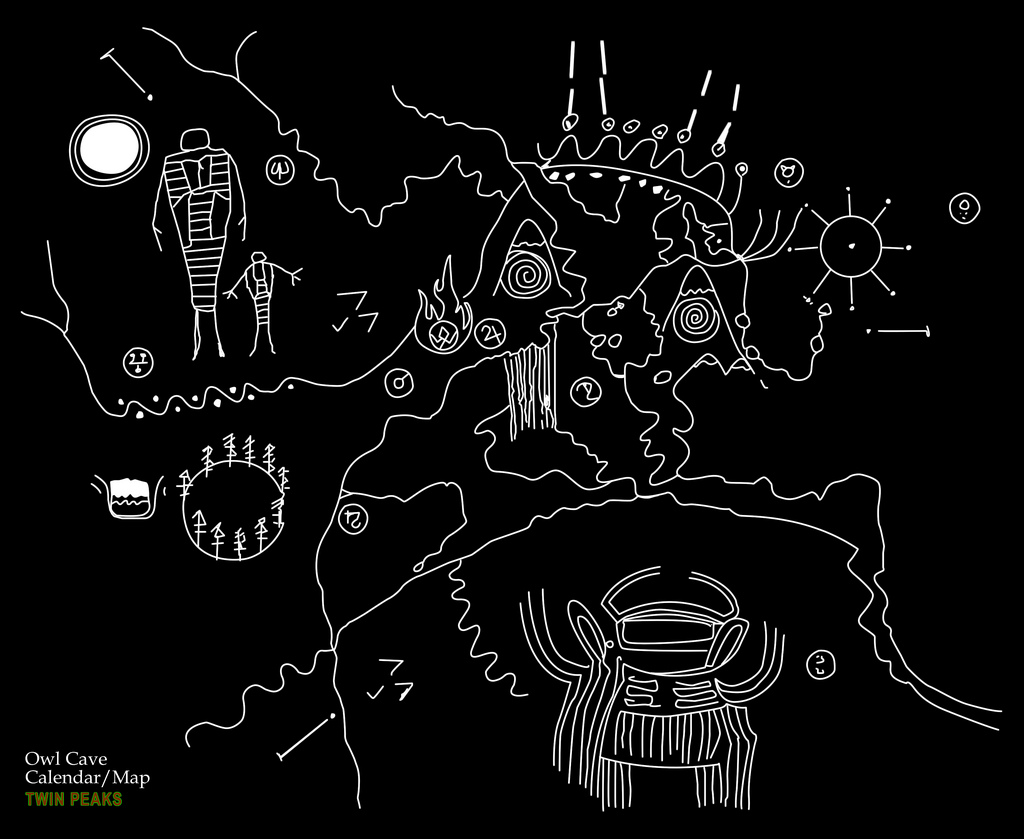
It is also worth noting the connection between Lewis’s apron and similar designs from the past: a long series of alchemical drawings that reproduce the same overall pattern of a “map” divided between day and night, with various symbolic elements scattered over their surface, and… the Owl Cave petroglyph, which was designed according to the same principles.
This slideshow requires JavaScript.

owl-cave-map

Apart from the various alchemical symbols the Owl Cave map depicts, it is also interesting  that the giant and the dwarf on the left hand side of the drawing (near what is probably the sun, though the rays emanating from the symbol on the right hand side of the drawing might also imply a star) can be read as ladders of sort. The saucers at the top of the map, over Black Lake come from the direction where one generally finds the All Seeing Eye in such designs. The pillars of the temple of Solomon are replaced here by the twin peaks of White Tail Mountain and Blue Pine Mountain.

John Thorn’s convincing proposal that these discrepancies are the result of a parallel universe or a different time line may not only affect the local history of Twin Peaks, but that of the larger world as well.

Follow Unwrapping the Plastic: https://www.facebook.com/unwrappingtheplastic/

What’s in a name?

After the first two posts that look back at the past of Twin Peaks, let’s take a brief look towards its future. In other words, here are a few lines about its upcoming third season – and more specifically about the character of Tamara Preston.

Who is Tamara Preston (also known as TP)? In Mark Frost’s The Secret History of Twin Peaks, we learn that she is the FBI agent tasked by Gordon Cole with discovering the identity of the person who compiled the various files included in the book (the Archivist). She is very thorough in her detailed analysis of the multiple elements discovered in the carbon steel lockbox in which the dossier was placed, annotating them extensively. She appears to be a rationalist, a former history major who strongly believes in the scientific method. This does not stop her from providing copious background data on the various conspiracy theories and esoteric cults mentioned in the pages of the file, from Lemurians to Aleister Crowley, including Illuminatis to giants skeletons found in pre-Columbian mounds.

The best hint about who she might be is contained in her name. In my book Unwrapping the Plastic I examine the names of central Twin Peaks characters in order to unearth buried elements of their role in the narrative. For instance, Laura Palmer refers to laurels and to palm trees, two classical symbols of immortality. It seems impossible for Laura to remain dead, she keeps coming back – as a memory, as an image, in a prequel, as Madeleine, etc. Who knows how she will come back in the series’ third season?

Tamara’s apparent rationalism (reminiscent of Scully in the X-Files) is a contrast to her surname, meaning “priest town” or “the priest’s village”. There is probably room for her – if she does indeed appear in the third season as a character – to become a more spiritually oriented individual. But one thing is for sure: the etymological roots of Tamara are derived from the Biblical name Tamar and mean… palm tree! One can surmise that this hidden connection to the Palmer family (and to immortality) will lead to interesting developments during the upcoming episodes of the series. It is also probably worth mentioning that Tamara was the goddess of rivers and streams in ancient Britain. This should sound familiar to any Twin Peaks fan and generate many links to the eventual fate of Laura…

Follow Unwrapping the Plastic: https://www.facebook.com/unwrappingtheplastic/

Laura Palmer’s Week of Kindness

In addition to Ruth, Roses and Revolvers by Man Ray, another segment of Dreams That Money Can Buy played a central role in the creation of Twin Peaks: the portion of the film entitled Desire by Max Ernst. Ernst was a German painter whose work had a tremendous influence on David Lynch, but his contribution to the collective film directed by Hans Richter almost feels like an aesthetic (and thematic) blueprint for Twin Peaks.

vlcsnap-2017-03-06-15h24m52s644

Hans Richter / Max Ernst – Desire (in Dreams That Money Can Buy)

Audrey Horne at the One Eyed Jack’s

Alongside aesthetic choices, which are clearly reminiscent of the Lodges, Desire‘s dreamlike and sinister qualities must have certainly appealed to Lynch. The film segment begins in the office of the dream investigator Joe/Narcissus whose first case, square Mr. A., reveals an unsuspected depth of repressed desires, erotic imagery, and murderous adulterous behaviors. The images he shows to Joe, images that he has created by cutting out pictures from magazines (which are actually taken from Ernst’s own work, more on that below), leave no doubt concerning these hidden wishes.

Case number one. Mr. and Mrs. A. He is a bank clerk, middle-income bracket. Character: methodical, exact. Wife complains he has mind like a double-entry column. No virtues, no vices. She desires a dream for him. One with practical values to widen his horizons. Heighten ambitions, maybe a raise in salary. Historical precedents for this hope range from Jacob’s pillow to Freud’s couch. Mrs. A. will please step outside during interview. Sorry, ma’am. Only one dream to a customer. Feel free to talk now.  Any special interests besides wife and job? None? One? What’s your idea of private fun? Cutting pictures out of magazines? Excellent. Let’s find out what that means. What do you look for in art? Design? Subject matter? Colour? Line? I understand. Beneath the correct grey ledger cover, you hide the wild images of the art lover. Let memory of mortgages, loans and property sales dissolve into the cries of nightingales

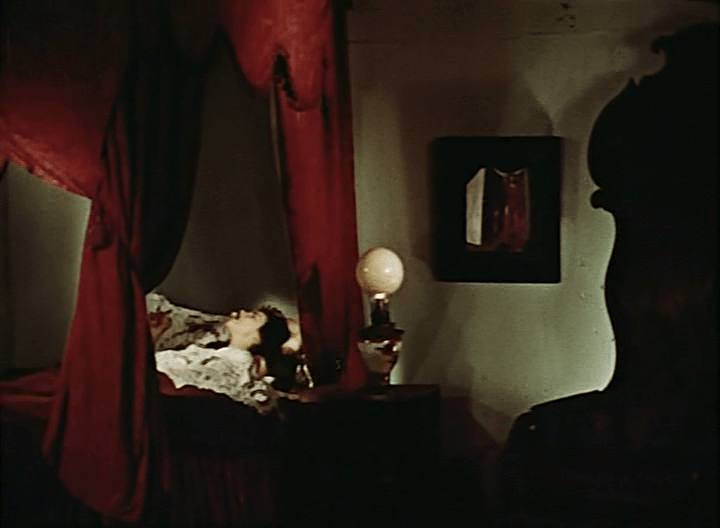
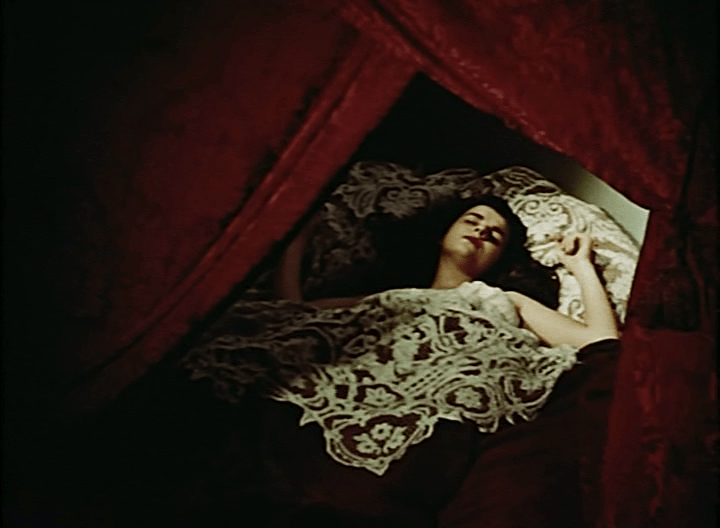
The actual dream starts then with the image of leaves falling to the ground beside a red curtain. We see a woman in a bed with red curtains and suddenly we have the feeling to be watching a Red Room sequence from another dimension.

vlcsnap-2017-03-06-15h23m43s944

WOMAN: A shady street. And in the middle of it there was a crowd of nightingales. They were large nightingales, and their breasts were rough and hairy. Some of them had calves’ hooves. And some had paws like panthers and wolves. Then they dragged me into a dark cavern in the middle of the street. MAN: What happened? WOMAN: They talked about love and pleasure. MAN: Yes, it does. Here it is. What is it? Who’s that? I can’t find it. I see it. I don’t know, do you like it? Where is it? It’s not here. When was that? Long ago. There it is. Take it. Put it away. I don’t like it. VOICES: He can’t see you. MAN: Yes I have. He can’t see you. VOICES: Do you know why? No. MAN: When was it? WOMAN: Love and pleasure. The ones with panthers’ feet said, ‘What is love but nature’s innermost principle in action? What is innocence but a pair of gloves to warm the hands?’ MAN: Admirable. VOICES: Yes, how true. How true. WOMAN: And the ones with calves’ hooves were saying, ‘What is nature but love’s innermost principle in action?’. VOICES: Absolutely wrong, never! Oh, no, no, no!

A bell tolls (wedding? burial?) and Ernst appears as an official –  “VOICES: And then? WOMAN: Yes. They killed me. The nightingales shot me in the back. They killed me. VOICES: What a pity! Terrible! Awful! WOMEN: Open the window. Men: Close the window.”

Then a wind rises and we hear voices speaking backwards. “WOMAN: No matter. This I shall never forget. It is beautiful. Who loves to come with me under my warm, white gown? Come, harpies and magpies, under my warm, white gown. Who loves to come with me under my warm, white gown? Come, harpies and magpies…”

Nightingales, red curtains, dreams, a dark cavern, a Nosferatu like character, sexual desires, voices speaking backwards, windows, love and pleasure/pain and sorrow… The parallels between this short film and Twin Peaks are many. Also note the dice that the man rolls near the end of the segment: they produce a double 3, highly reminiscent of the domino Hank Jennings carries with him everywhere in the series.

What does this film segment communicate? Behind its cryptic and surreal veil, it is possible to read the nightingales as a mask for men, some who behave in a civilized manner (those with calves’ hooves, i.e. vegetarians) and some who act as sexual predators (those who have panther and wolf-like paws). Twin Peaks focuses so much on sexual predation that it’s difficult not to see Leland/BOB behind this second category.

Ernst deepens the reference to nightingales by linking it his own painting from 1940 entitled, The Clothing of the Bride. This paining is similar to his earlier 1924 image, Two Children Are Threatened by a Nightingale. In both paintings, sexual danger is clearly associated with the figure of the bird, something ominous seems to be happening in front of our eyes, a murderous secret hidden in plain sight.

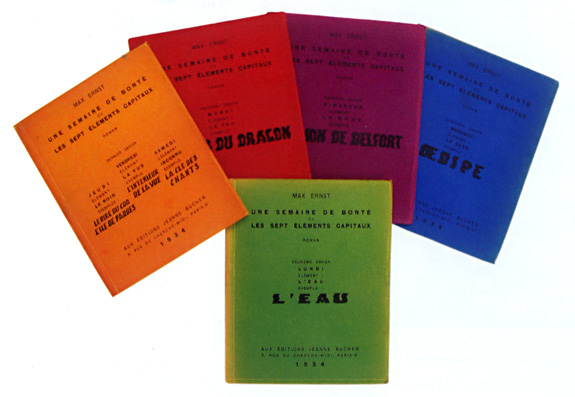
Desire originates in turn from Ernst’s older project, Une semaine de bonté (A Week of Kindness), an artist’s book from 1934 that he created by creating collages from Victorian illustrations. We actually see the book in the hands of Mr. A. at one point in the film, when he pretends that the images are the result of his own work. This project was composed of seven books (although published in five volumes), one for each day of the week. Each day is also associated with an element (Sunday-Mud / Monday-Water / Tuesday-Fire / Wednesday-Blood / Thursday-Blackness / Friday-Sight / Saturday-Unknown). The result is a series of dark and surreal images, sexually charged, full of violence and nightmarish situations. Remember that Twin Peaks: Fire Walk With Me is about the last seven days in the life of Laura Palmer…

UneSemaineDeBonte

Une semaine de bonté

The book for Monday and Water includes several drawings that were transposed to the screen by Ernst. In these images, we see a woman lying on her bed, dreaming, with heavy curtains surrounding her. Underneath the bed we see water everywhere, as if she were afloat on the ocean – the ocean of consciousness, to quote David Lynch and the Maharishi Mahesh Yogi.

When the woman dreams, it is as if she were sailing on this ocean, visiting places in the collective unconscious described by Carl Jung – diving to the bottom of the waters so as to catch the big fish/ideas linked to Transcedental Meditation This is very similar to what happens in Twin Peaks when people go to bed, especially Dale Cooper and Laura Palmer. Both are regularly cruising on these waters, towards the Red Room and its riddles.

To close this post for now, it is also worth mentioning another project by Max Ernst that might have played a role in the creative work of David Lynch: his graphic novel from 1927 called La Femme 100 Têtes (The Woman With 100 Heads – which can also be understood as a homonym in French that would change the meaning to The Woman Without A Head, or The Woman Persists). Several visual links are clearly discernible between this work and Twin Peaks, including references to Greek mythology, the role of electricity, women asleep in curatined beds, etc.

A surreal short film adaptation was made in 1968 from these images, directed by Eric Duvivier. We can find many associations in this adaptation with works by Lynch, such as the image of a woman in bed, also found in Desire and in The Alphabet, or the other moment when a man is superimposed on a sea of ants, highly reminiscent of Blue Velvet.

The Alphabet (David Lynch – 1968)

This slideshow requires JavaScript.

La Femme 100 Têtes

palmer

La Tête Sans Femme (The Head Without a Woman)…?

Follow Unwrapping the Plastic: https://www.facebook.com/unwrappingtheplastic/
RRR

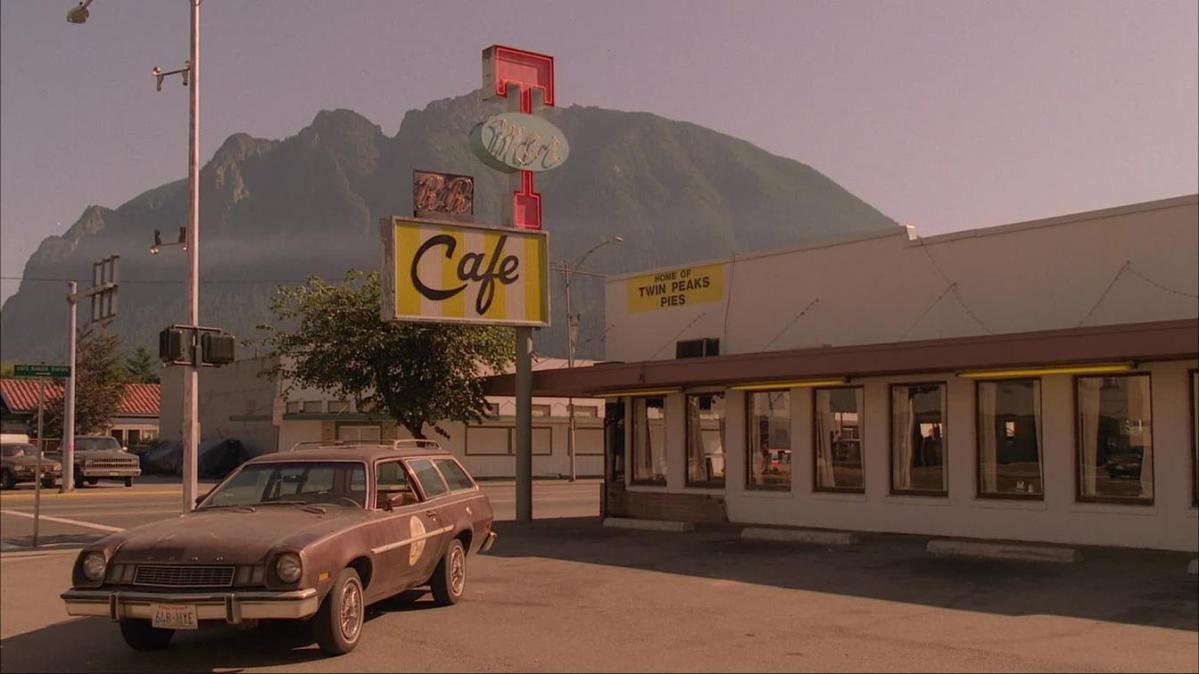
It seems as good a place as any other to start this blog with a post about what I call the Triple R. Not the iconic Double R diner through which most of the characters of the show pass through at one point or another during the series or the film, but the RRR. While the RR feeds the inhabitants of Twin Peaks, the RRR only fed David Lynch’s creative process.

rr-diner

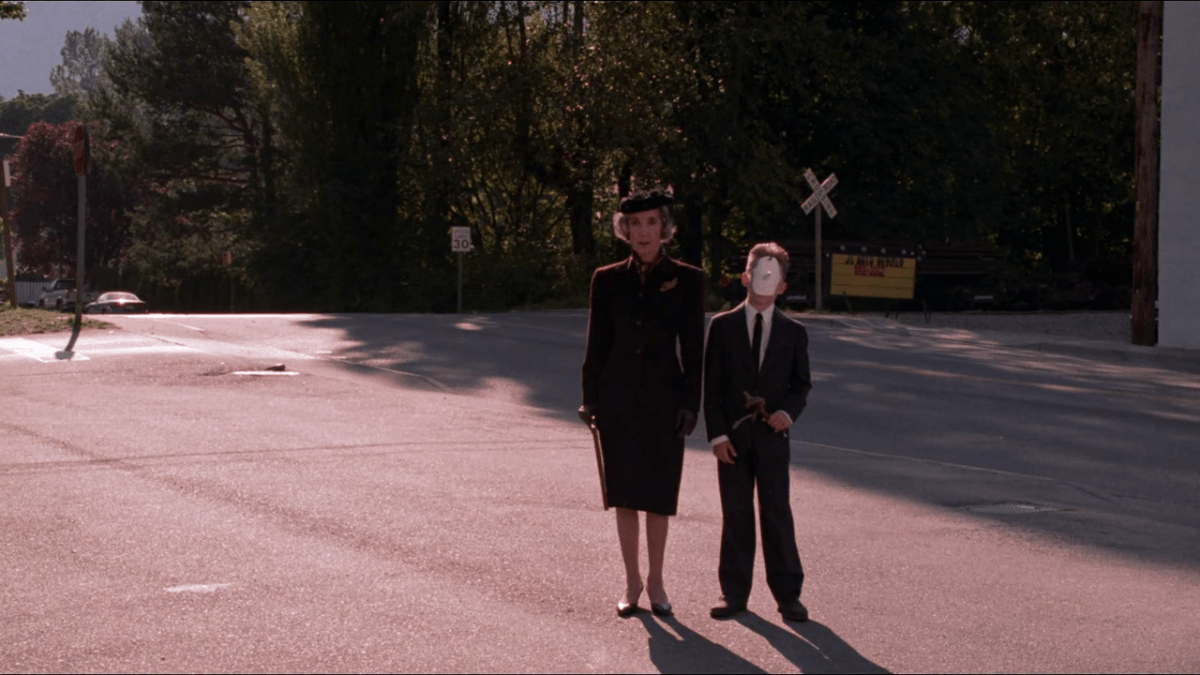
The name of the RR diner is a direct reference to the neighboring Rail Road which we discover in TP:FWWM when the Tremonds come to warn Laura about “the man behind the mask”. This rail road – which prefigures the abandoned train car in which Laura will be murdered – is a track to another level of reality that the Lodge entities inhabit. It is no surprise, then, when the Tremonds appear at a junction between this track and a street: crossroads are indeed well known spots to meet otherworldly beings (which is probably why so many shots of Twin Peaks are dedicated to traffic lights). The RR is perfectly placed to facilitate connections to the other side of the mirror and its four dimensional entities. It’s a perfect meeting place, the spot where the heart of the town beats.

figure-14

The extra R in RRR references a segment from the collective surrealist film coordinated by Hans Richter, Dreams That Money Can Buy (1947) for which Man Ray contributed an episode entitled Ruth, Roses and Revolvers. Jean-Luc Godard is well known for having said in 1961 that: “all you need for a movie is a gun and a girl” (sexist much?). With his segment, Man Ray gave us both, Ruth and a revolver – but he added a rose inbetween them, as a mediator between the beauty of the woman and the dangers of the gun (or is it the other way around?).

In 1987, David Lynch presented an episode of the Arena series on the BBC dedicated to Surrealist films that have influenced him. Out of the 9 extracts included in the episode, four come from Dreams That Money Can Buy, including Ruth, Roses and Revolvers, both the title of the Arena episode and the first film extract featured.

dl

Arena documentary presented by David Lynch

Ruth, Roses and Revolvers is a statement about the medium of cinema, a critique of spectatorship and of the hypnotic state into which viewers are plunged when watching a movie. But it is also a critique of Hollywood cinema with its stars that people try to mimic, or the sheep-like attitude linked to the process of character identification. Inversely, the film can also be read as a first in audience participation, many years before The Rocky Horror Picture Show.

Ruth, the woman who stands in front of a red curtain and who introduces the film within the film, is dressed in blue and wears roses on her dress and in her hair (we will come back to the symbolism of the rose in a future post). In many ways, she is reminiscent of Laura Palmer in the Red Room. She invites the audience to reproduce the gestures of the character on the screen: “To give these gestures their full meaning, I earnestly request you to follow and to repeat these gestures as they occur”.

The interactive nature of the film she presents creates a mirror effect between the screening and the audience, a ripple effect followed by most people in the theatre. In this process, it becomes difficult to know who is imitating whom. The spectators somehow end up becoming reflections of the character on screen, shadowing his movements. This inversion of sides of the mirror is of course a recurring theme in Twin Peaks, one that returns over and over throughout the course of the series and the film.

This slideshow requires JavaScript.

Before the character appears on screen in the film, a short sequence of four shots introduces the film within a film. We see a bird flying high in the air, above trees ; a rock ; some grass ; and finally water. This sequence serves as opening credits of sorts, setting the tone for what is to come next.

If we analyze the various shots listed above and compare them to the opening credits of Twin Peaks, the similarity is striking and the link to the classical four elements obvious: in both cases we start with a bird (air) ; we then move to a rocky element, which takes the form of the metal blades used to saw wood in the Packard Sawmill, generating fiery sparks (fire) ; the earth shot of grass can be compared to the emblematic shot in front of the Twin Peaks sign, at the entrance of this clearly delineated patch of land (earth) ; and finally a shot over still water closes the two segments (water). In both instances, we are introduced to a cosmogonical presentation of the universe in which the tale takes place, a world devoid of men, dealing with elemental forces. Humans somehow only appear only as a byproduct of this creation process, not as its raison d’être.

When Ruth eventually appears and makes her short speech about gestures in Dreams That Money Can Buy, it is difficult not to make a link between her discourse and the presence of several elements in Twin Peaks that resonate with what she says. The Red Room immediately comes to mind, with its Greek statues and the much discussed “meanwhile” pose by Laura Palmer. These poses are  highly reminiscent of some of the theatrical ones exhibited by Ruth herself during her presentation in front of the cinema audience.

Gilles Deleuze, in his film writing, made a distinction between poses (privileged moments in time) of statues and photography, as opposed to the indifferent flow of film images, which does not require privileged cuts in time. When Laura Palmer takes a pose in the Red Room and says “meanwhile”, it creates a strange disruption as this is both reminiscent of the pose of a statue and of the pause used in silent cinema to screen an intertitle with these same words.

meanwhile

Laura and Ruth’s poses can also be associated with those of statues in the Red Room. As we can see below, the famous painting The Birth of Venus (1486) by Sandro Botticelli and the Greek statue of the Venus de’ Medici (1st century BCE) use similar gestures, frozen moments in time. The mannequins from another segment of Dreams That Money Can Buy, directed by Fernand Léger and called The Girl with the Prefabricated Heart, look very similar to the Red Room statues, Laura and Ruth.

Meanwhile…. time stops its flow.

The presence of Venus in the Red Room, known in Greece as Aphrodite, and her visual association with Laura Palmer is not an accident. Remember that Venus (the goddess of love, beauty, sex, and fertility) is at the root of the Trojan War via the Judgement of Paris. And in The Secret Diary of Laura Palmer, written by Jennifer Lynch, we learn that Laura once had a horse named… Troy! (and a cat named Jupiter, who in mythology happens to be the father of Venus).

In 2007, David Lynch created a short-film entitled  Absurda that bears many similarities to some of the elements described in this post. The film takes place in a movie theatre, like Ruth, Roses and Revolvers, but this theatre is seemingly empty. Several people are heard commenting on the film projected on the  screen. But this is not a screen in the traditional sense of the word. It probably needs to be understood as a projection screen, from a psychoanalytical point of view, on which the unconscious and the repressed of the patients are vizualised. It only blocks the projection to make a return of the repressed possible. In Absurda, the repressed seems to be a murder, committed with scissors (it would not be too far-fetched to call this film, as an alternate title: Cindy, Dancer and Scissors), though the scissors could also be associated with the legs of the girl dancing on pointe.

absurda

Absurda

It seems to me that Twin Peaks, Ruth, Roses and Revolver and Absurda all share striking similarities, visually  and thematically speaking. They are all linked to the workings of the unconscious, to the world of dreams, to the role of the passive spectator and to the mirror effect created by the transposition of our fantasies to the screen.

Follow Unwrapping the Plastic: https://www.facebook.com/unwrappingtheplastic/