Cosmic Cinema

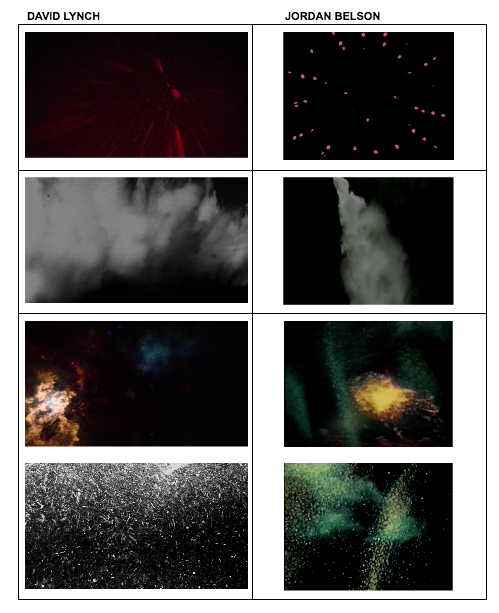
Episode 8 remains one of the main landmarks of The Return – it might be Lynch at his most experimental, flirting with non-narrative cinema as well as with complex metaphysical and esoteric issues. One of the most impressive moments of the episode is of course the one when the camera dives into the atomic mushroom over New Mexico, leading to cosmic imagery (and cosmic consciousness), worthy of the Stargate sequence in 2001: a Space Odyssey.

The reference to Stanley Kubrick, though pertinent to some extent, might nevertheless lead us to overlook another possible source for this sequence. I believe that the various (micro & macro)cosmic explosions we witness in this episode might have been influenced by the work of another American filmmaker: Jordan Belson (1926-2011), much of which predates Kubrick’s 1968 masterpiece.

From 1947 to 2005, Belson created a series of abstract and spiritually oriented films of extreme beauty. Like Lynch, he started as a painter before moving on to filmmaking, and he was also strongly influenced by Eastern theologies, notably by Buddhism and the Bardo Thodol (the Tibetan Book of the Dead).

Gene Youblood writes about Belson’s films in his book Expanded Cinema and says that “Belson’s work seems to reside equally in the physical and the metaphysical… He regards the films not as exterior entities, but literally as extensions of his own consciousness”, which is something one could also say about Lynch’s work. He goes on: “The films are litlerally superempirical – that is, actual experiences of a transcendental nature”. Also, like Lynch, he always maintained the illusion of his magic by not divulging his methods.

You can watch Belson’s film Samadhi (1967) – that state of consciousness in which the individual soul merges with the universal soul, when the physical world of sangsara and the spiritual world of nirvana become one -, a good starting base for his filmography, by clicking on the link below the image.

Samadhi.jpg

Samadhi

Interestingly when one discusses the similarities between Belson’s films and Lynch’s work on episode 8, Youngblood writes about his film Re-Entry (1964 – based on the Bardo Thodol’s intermediate state between death and rebirth): “The image in Belson’s film is somewhat like slow-motion movies of atomic blasts in Nevada with the desert floor swept across by a tremendous shock wave”. The cosmogonic experience of episode 8 finds a parallel in a quote by Belson himself who said of his film Momentum (1968): “I realized that the film doesn’t stop at the sun, it goes to the center of the sun and into the atom… The end shows the paradoxical realm in which subatomic phenomena and the cosmologically vast are identical”.

Screen Shot 2017-11-24 at 8.45.30 AMScreen Shot 2017-11-24 at 8.45.49 AMScreen Shot 2017-11-24 at 8.46.09 AM

Follow Unwrapping the Plastic: Facebook / Twitter

The Metaphysical Peaks

The world of Twin Peaks is of a metaphysical nature.

What does that mean? The word “metaphysics” derives from Greek and signifies “beyond physics”. In Twin Peaks, physical reality is not enough, there is also something “beyond” – another reality above, below, or behind the one in which we exist. A Fourth Dimension that “transcends” the limited traditional 3D reality of everyday life. Twin Peaks‘ physical world is nothing but a double, an image, a shadow of this other more fundamental reality.

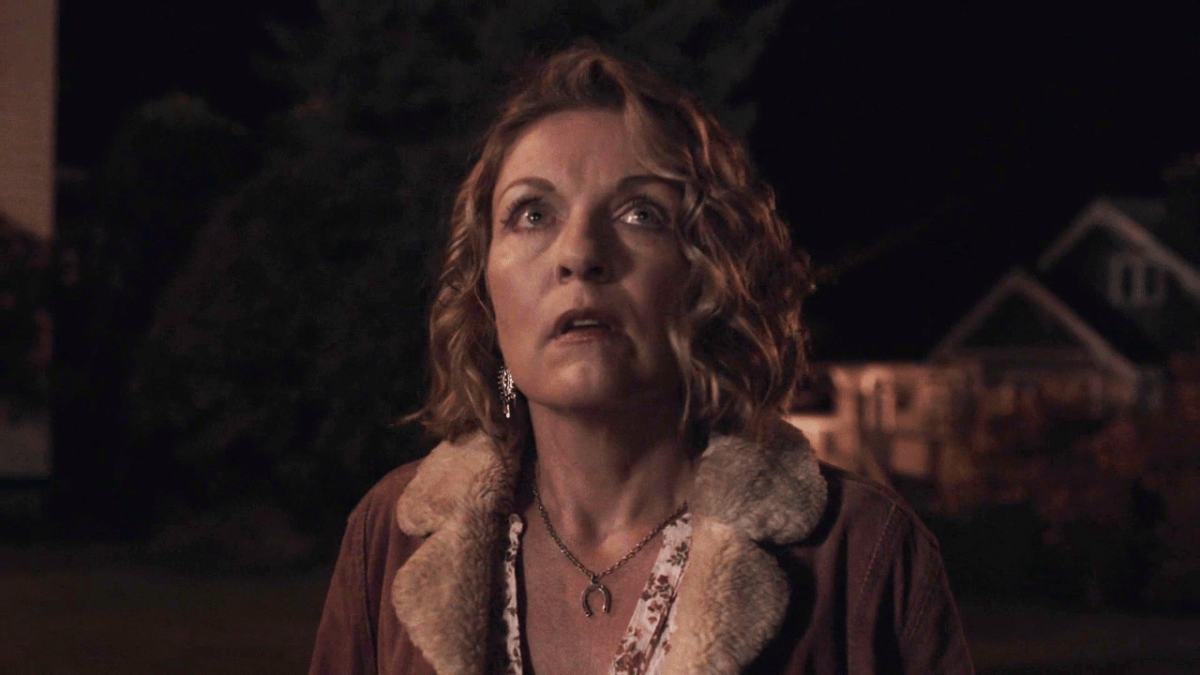
Like Dale and Laura, some people are lucky enough to access this transcendental level of being beyond our own (via dreams, astral projection, etc.). Since time works differently there, they often become human oracles, as with the Log Lady. They receive glimpses of the future thanks to their connection to a realm where time works cyclically and not in a linear fashion as it does in our world. This advantage can sometimes become problematic, as it’s difficult for them to know precisely at which point in the river of time they will return when they exit the Lodges (as Dale Cooper learns in episode 18 of The Return).

On this other plane of reality, “I” is really someone else – a double who is both me and not me. Actually, in a sense, this double from the Fourth Dimension is more fundamentally me than I am. I am only its shadow (of flesh). It is closer to the bottom of the ocean of consciousness. It lives in Plato’s intelligible world, the world of pure Ideas.

In his book “Le réel et son double” (“The Real and Its Double”, 1976), French philosopher Clément Rosset writes:

The double that represents the subject is an immortal double, tasked with keeping the subject sheltered from his own death… But that which troubles the subject more than his own death, is first his non-reality, his non-existence… it’s no longer the other who is my double, it is I who am the double of the other.

If this essential other disappears, it’s our very existence that is called into question. This is why Dale Cooper’s plight is so terrible – beyond death, it’s his very existence that is at stake in The Return. He has to awaken from the dream into which he has been plunged  in order not to travel from being into nothingness.

Rosset then goes on:

Perhaps the foundation of anxiety, apparently linked here to the discovery that the visible other is not the real other, is to look to a more profound terror: to not be myself, that who I thought I was. And even deeper still, to suspect on this occasion that I am perhaps not something, but nothing.

Not me.png

How can we prove that we exist? To a certain extent, we can prove it to other people with our birth certificate, if we have one… but how can we prove our existence to ourselves? We have never even seen ourselves!

The true presence of one’s self to self  implies renouncing the spectacle of one’s own image. Because here the image kills the model… me, that I have never seen and never will see, even in a mirror… it doesn’t show me the inverse, but another; not my body, but a surface, a reflection.

This is likely why symmetry and mirrors play such a central role in Twin Peaks – they duplicate reality, but also invert it. It is not ourselves that we see in our mirrors, but our inverted selves, our doppelgängers.

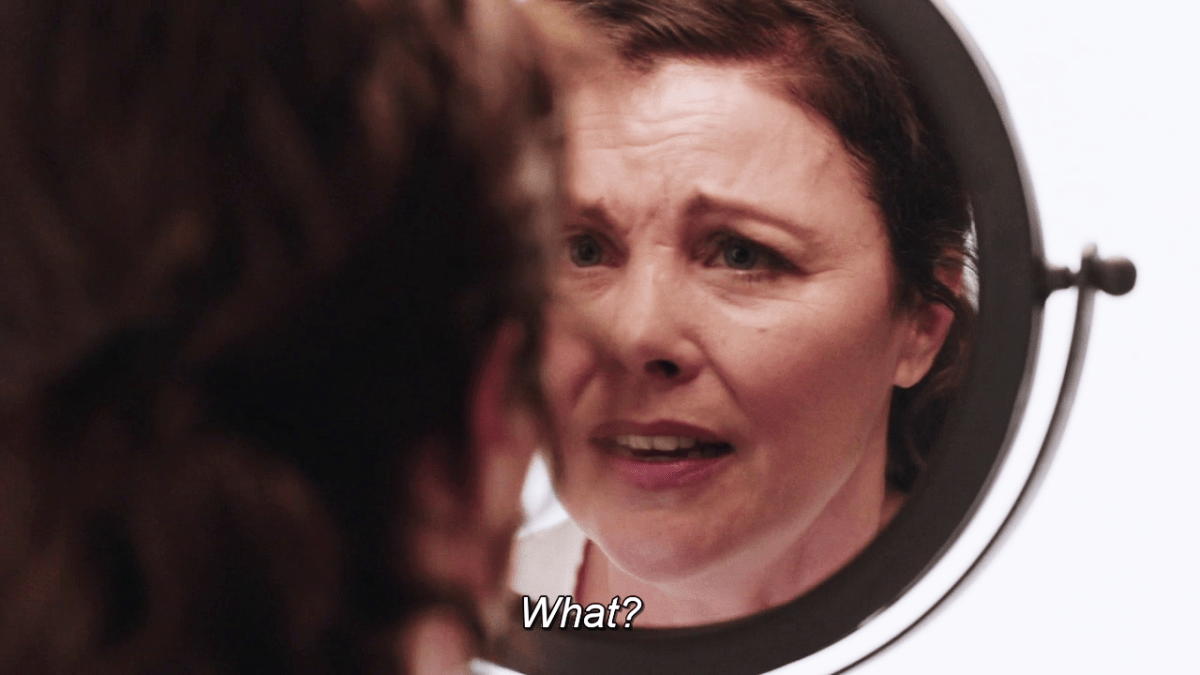
Sartre would nevertheless argue that one possible way to prove our existence to ourselves might be through our actions. Audrey’s husband calls this “existentialism 101”. On the other hand, since it takes so long for Audrey to actually do anything, to act, she’s getting closer and closer to nothingness, to inexistence.
vlcsnap-2017-08-28-15h57m06s002

Let’s come back to the twin peaks mentioned in the title of this post. The purple ocean’s peak and Jack Rabbit’s Palace are, in spite of their differences, essentially the same. Finding the latter is actually described as a way to access the former – Andy and the Double get teleported to the Fireman’s place when they reach the grove close to Jack Rabbit’s Palace. Both layers of reality are superimposed at this precise location, as if they were pieces of cloth sewn together, over each other.

Images from various levels of reality transpire through the cloth and patchwork of the universe and some people are lucky enough to get glimpses of what lies behind. Holes (or vortexes) in the fabric of reality enable one to see and travel through those layers. In Lynch’s Inland Empire, for instance, one remembers the cigarette-burn hole in a piece of silk…

CigaretteBurn

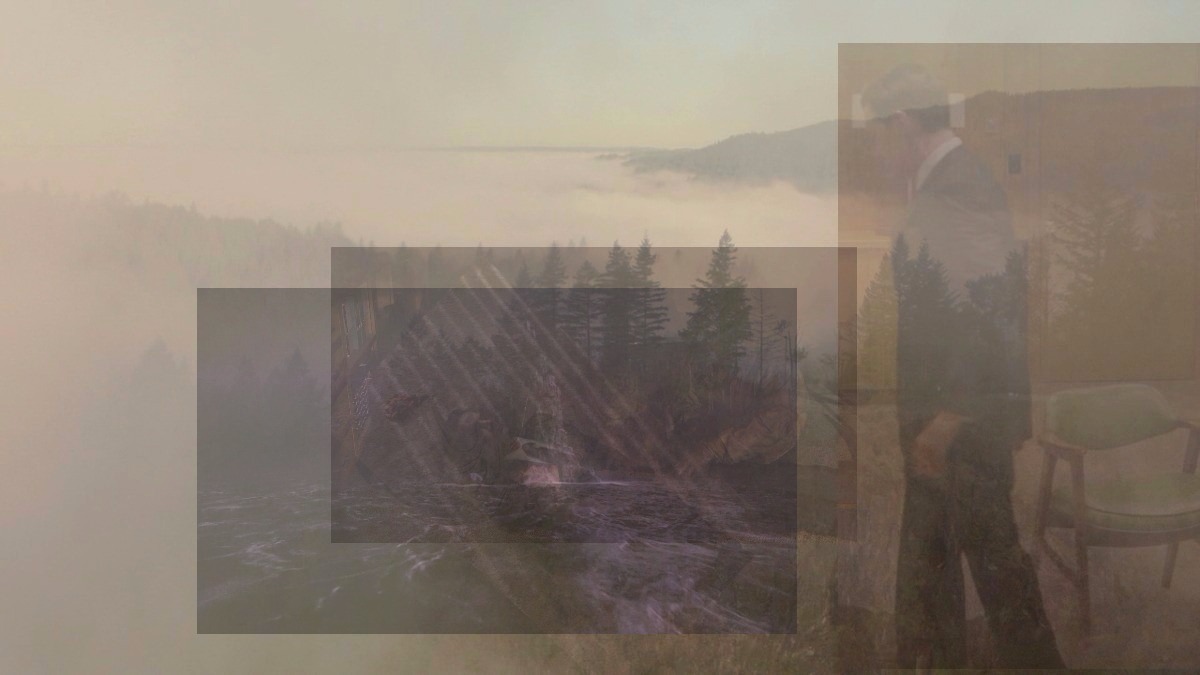
The reason for the omnipresence of superimpositions of images in The Return is that the various cloth/universes are getting close together, masking each other. From the hidden layering of the opening credits (the plight of the three versions of Dale Cooper illustrates this tension between conflicting realities) to the superimposition of Cooper’s face in the sheriff’s station during episode 17, this is a recurring motif in the third season of Twin Peaks.

Gene Youngblood, the author of Expanded Cinema, would probably argue that The Return is a work of synaesthetic cinema, a cinema that “provides access to syncretistic content through the inarticulate conscious“. In his book, he writes:

Paul Klee, whose syncretistic paintings closely resemble certain works of synaesthetic cinema, spoke of the endotopic (inside) and exotopic (outside) areas of a picture plane, stressing their equal importance in the overall experience. Synaesthetic cinema, primarily through superimposition, fuses the endotopic and exotopic by reducing depth-of-field to a total field of nonfocused multiplicity.

Here, instead of “a total field”, David Lynch would probably say “a unified field”…

Youngblood goess on:

Moreover, it subsumes the conventional sense of time by interconnecting and interpenetrating the temporal dimension with images that exist outside of time.

It seems to me that this is a very good summary of what Lynch did with these various superimpositions, unifying different locations and times into the picture plane, where there is no more inside and outside.

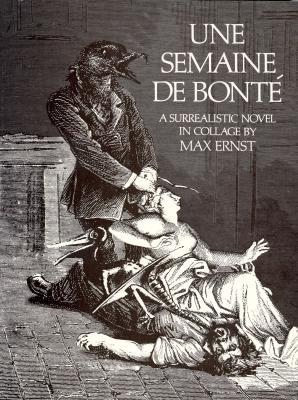
Youngblood concludes by saying that “synaesthetic syncretism replaces montage with collage“. I have stressed many times (in my book and on this blog) the links that exist between Twin Peaks and the works of Max Ernst, especially with his collage A Week of Kindness.
Ernst.jpg

Follow Unwrapping the Plastic: Facebook / Twitter

The Process of In/dividuation

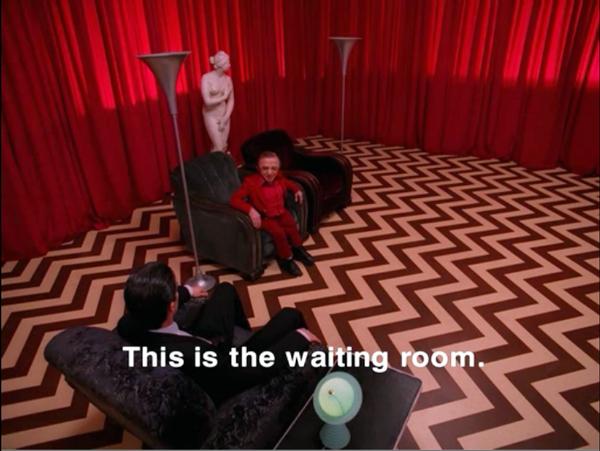
In my book Twin Peaks: Unwrapping the Plastic, one of my main claims is that “Twin Peaks is fundamentally about one thing: the “process of individuation” described by Carl Gustav Jung, that is to say, the integration by the various characters of the unconscious elements of their personalities in order to evolve as individuals“. I argued that the Red Room was a secret garden of sorts, a Temenos, which enabled those who visited it to proceed faster down the lane of this integration. It appears in The Return that this is also a place where the whole process can go horribly wrong, as we saw with the Double.

waiting

Before going any further, one must ask the following question: what is an “individual”? What do we mean when we say that someone is “an individual”?  An individual is literaly someone who cannot be divided (in/dividual, as in in/divisible). This claim is of course always something of a stretch – we are all, to some extent, a multiplicity. The person who goes to work in the morning is not exactly the same when meeting his or her parents later in the afternoon, who is also different from the person who spends time with his or her friends in the evening, etc. We are all legion. Nevertheless, the general idea is one of stability from day to day, that we are globally the same as yesterday and that tomorrow we will remain mostly the same as today.

When these various segments of our personality become separated, independant from each other, we are facing serious psychological disorders, shattering the notion of a balanced whole (balance being of course one of the central elements of Lynch’s view of the world). The Return is very much concerned with this idea, about the possibility of people with split personalities – even with the idea that some personalities might be so split from the original that they become “individuals” of their own. Dale Cooper and his polar opposites (the Double and Dougie) is of course the main example one finds in Twin Peaks. But Laura Palmer and her many incarnations, from Madeleine to Page, also fits this description. Interestingly enough, they both visited the Red Room, the place where this process of (dis)in/tegration seems to take place.

My personal reading of the opening credits of The Return, with its superimpositions, tends to give credit I believe to the idea that this process is at the core of the series’ mythology. I have already described and analyzed the various strata of images layered during the original fly over Twin Peaks (see here, for instance). What matters is the fact that right from its first image (besides Laura’s brief appearance in a globe), the series underlines the crucial role of the conflict between Cooper’s various persona.

image (5)

The Double and Dougie, polar opposites, cross each other while lying on the ground, under the eyes of Dale Cooper, observing his doppelgängers while it remains unclear which side will win. In order to become whole again, to become a true individual once more, one that has successfully integrated the unconscious elements of his personality, this multiplicity will need to cease (as it does in episode 17).

In Laura Palmer’s case, the final success is of course less obvious, as her Carrie Page double does not seem to remember who she really is (unless we consider the very last moment of the series, when she hears Sarah’s voice?). Something along the way appears to have blocked her process of individuation, her true personality has been veiled by a persona, a blank “Page” who has taken over. Does her final scream mean that she has finally torn the veil and seen through the curtain?

vlcsnap-2017-10-26-10h39m09s911

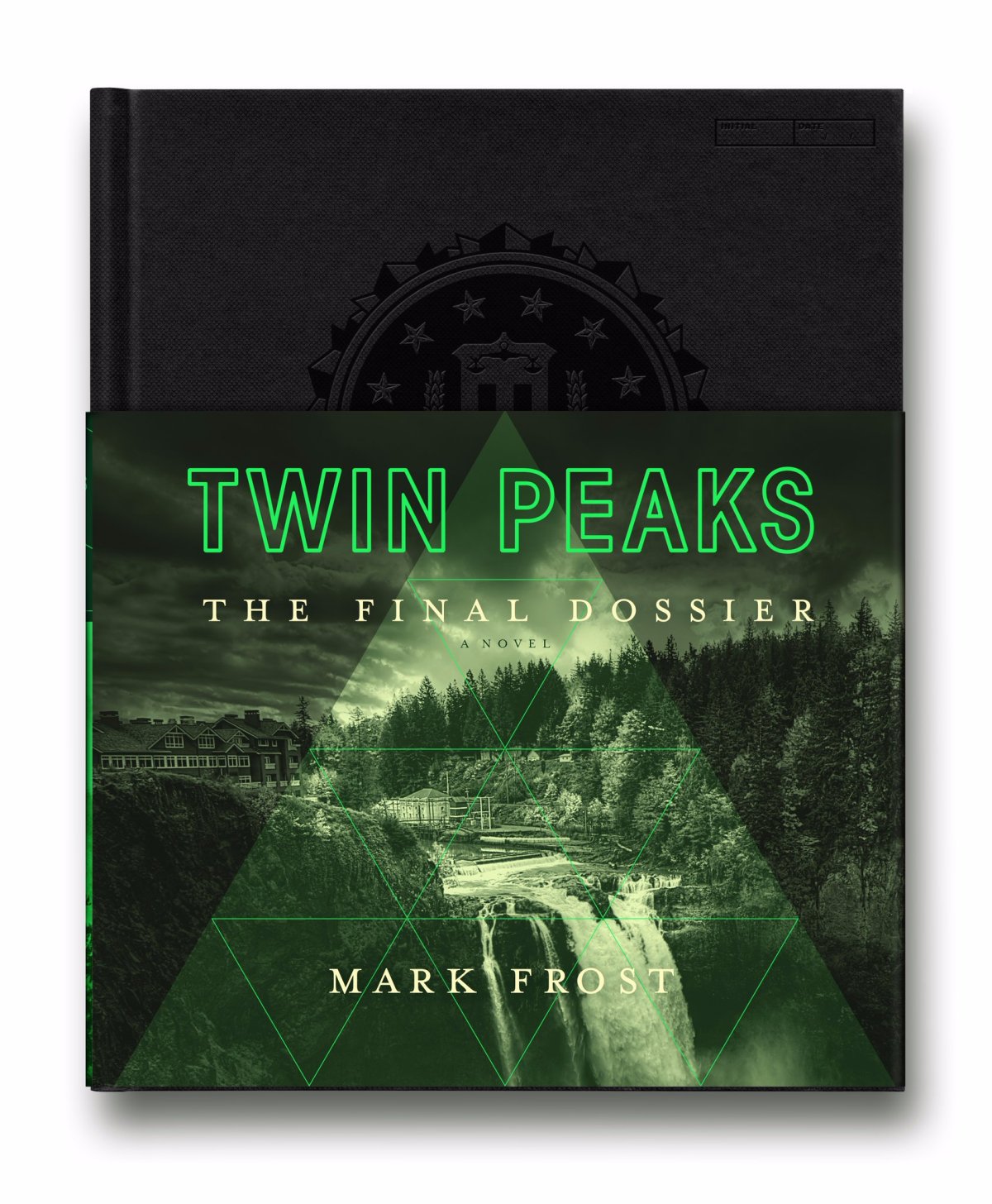
The Jungian process of individuation can be linked, to a certain extent, to what takes place in Alchemy when described as a way to proceed from mental lead to mental gold – a process of purification, of integration that leads to a better, more balanced whole. Tamara Preston makes this very clear in Mark Frost’s latest book, Twin Peaks: The Final Dossier, when she writes about Doctor Jacoby’s golden shovels: “The desired transformation through undertaking this assignment he described as a process of ‘intrapersonal alchemy,’ turning the lead of dull, everyday consciousness into the gold of an evolved human soul, the goal of what he described as a hallowed tradition in esoteric philosophy harking all the way back to the Middle Ages. This led to Jacoby offering literal golden shovels for sale“. She actually starts wondering if this quest for personal integration might not be what hides behind the Blue Rose task force itself: “Is that the secret at the heart of the Blue Rose and the work we do? To identify root causes of human misery and evil, do we first have to find them in ourselves?“.

To parody the motto from another famous TV series from the 1990s: “The Truth is IN here“. Could that truth be the quest for immortality?

twin-peaks-the-final-dossier (1).jpg

Paradoxically, even though we probably live in the most secure and prosperous era ever known by humanity (see Steven Pinker’s The Better Angels of our Nature), with a global and drastic decrease in violence on every front, the general feeling is nevertheless that we are currently experiencing troubled times (because of 9/11, Trump’s election, the war in Syria, etc.). The arts have relayed this opinion through the metaphor of the zombie, a nihilistic “no-future” character who has become omnipresent in fiction since the turn of the millenium.

The idea that we are currently experiencing a “dark age” is also present in The Return. Whether this reality is supposed to reflect our own or be independent from it (its dark age being the result of the Double’s influence, though the nuclear explosion in New Mexico might very well be the true root of the problem), one can nevertheless note that Mark Frost shows strong concerns regarding  the Trump administration (rightfully so!) and that David Lynch is very preoccupied by the omnipresence of violence and the necessity for world peace (as proven by his actions for the Transcendental Meditation movement).

Amp.png

Literary theorist Thomas Pavel argues in his 1986 book Fictional Worlds that during times of peace, fictional incompleteness tends to be reduced to a minimum, whereas it tends to be maximized during transitional and conflictual times. Fictional works created during the latter want to mirror the torn nature of reality itself. Strangely enough, although this beginning of the 21st Century is extremely safe overall, with peace, democracy, and the rule of law having reached their highest peaks in history, the general public consensus is the opposite (due to the media’s influence? because of dire threats that we face today, such as global warming or economic cycles?) and supports the idea of a time of crisis, reflected in The Return’s “dark age”.

As with Doctor Jacoby in Twin Peaks, a vast amount of people interpret “this as confirmation of his theory that the United States, and perhaps the world, might be entering into what he saw as a ‘Kali Yuga’—an ancient Hindu term for a ‘dark age.’” (from The Final Dossier). The very structure of The Return reflects this conviction in its strong fictional incompleteness, torn between multiple locations in space and in time, full of questions that remain unanswered, of characters who only appear once or twice before totally disappearing from the script, etc. Instead of the unified world that Twin Peaks once was, before the Double, season 3 depicts a patchwork reality made of various cloths, weaving together different dimensions/universes, always ready to be torn apart (as with Page’s shriek at the end of episode 18).

Beyond the interpersonal level, we are dealing here with the idea of a split in the fabric of things. Instead of torn personalities, the “dark age” theory claims that it’s the world itself that is torn apart, ready to crumble. From the point of view of the personal as well as of the collective unconscious, the process of individuation appears to currently run counter clockwise. Instead of integrating levels of personality and reality, it tears them into new segments. It divides instead of adding, it multiplies instead of simplifying. Lynch’s “unified field” appears unreachable in this universe devoid of unity.

Follow Unwrapping the Plastic: Facebook / Twitter